
Commercial
Fire Compliance.
Structured for Business Continuity.
Professional fire risk assessments, fire door inspections, and compartmentation surveys for offices, retail units, industrial facilities, and mixed-use commercial buildings across the UK.
Fire Safety Is a Legal Obligation —
and a Business Risk.
Commercial properties must comply with the Regulatory Reform (Fire Safety) Order 2005.
For business operators and property owners, fire compliance impacts:
- Legal liability
- Insurance validity
- Staff safety
- Customer safety
- Operational continuity
- Reputation
Non-compliance may result in:
- Enforcement notices
- Business disruption
- Significant fines
- Criminal prosecution
- Insurance disputes
Fire compliance is not simply regulatory — it is operational risk management.
The Responsible Person in Commercial Premises
Under UK law, the “Responsible Person” may include:
- Business owners
- Employers
- Facilities managers
- Property management companies
- Landlords of commercial premises
The responsible person must ensure:
- A suitable and sufficient Fire Risk Assessment
- Regular review and updating
- Safe escape routes
- Fire detection systems
- Firefighting equipment
- Staff awareness and training
Structured Assessment for
Commercial Environments
OFHSES assessments are tailored to operational settings.
Fire Hazard Identification
- Machinery risks
- Electrical systems
- Storage of flammable materials
- Kitchen or canteen risks
Fire Doors & Compartmentation
- Fire door integrity
- Fire stopping breaches
- Structural separation
- Smoke control pathways
Detection & Alarm Systems
- Coverage suitability
- Zoning alignment
- Testing documentation
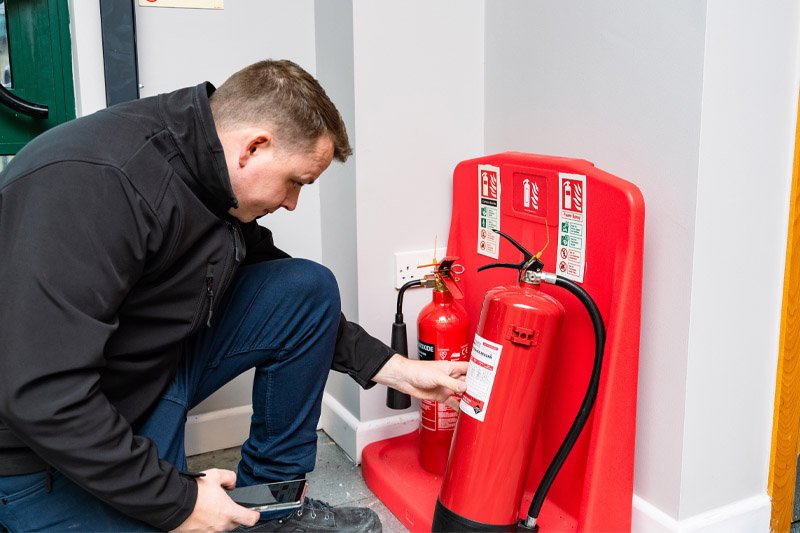
Firefighting Equipment
- Correct extinguisher placement
- Service records
- Accessibility
Escape Routes & Signage
- Exit routes
- Emergency lighting
- Signage clarity
- Obstruction risks
Specialist Support for Complex Premises
We provide structured compliance services for:
- Office buildings
- Retail units
- Warehouses
- Industrial facilities
- Mixed-use developments
- Hotels and hospitality venues
Each environment carries unique fire risk profiles.
OFHSES aligns assessments with operational realities.

Compliance Is
Also Risk Mitigation
Effective fire compliance:
- Protects staff and customers
- Reduces insurance disputes
- Minimises operational downtime
- Protects brand reputation
- Demonstrates due diligence
A structured fire risk assessment forms part of broader risk management strategy.
How OFHSES Delivers Commercial Fire Compliance
We operate a disciplined four-stage model:
Step 1 — Operational Review
Understanding occupancy patterns, operational processes, and risk exposure.
Step 2 — On-Site Structured Inspection
Detailed review aligned with UK fire safety legislation.
Step 3 — Risk Categorisation
Clear classification of issues by priority.
Step 4 — Action Roadmap
Structured, practical corrective guidance.
Step 5 — Ongoing Review Recommendations
Clear timeline for review and updates.

Frequent Issues in Commercial Premises:

- Inadequate escape route protection
- Poor maintenance documentation
- Fire door integrity failures
- Compartmentation breaches after refurbishment
- Outdated alarm systems
- Lack of documented review
Early intervention reduces enforcement and disruption risk.
Your Commercial Fire Risk Assessment Report Includes:
- Executive summary
- Detailed findings
- Risk categorisation
- Photographic evidence
- Prioritised action plan
- Documentation suitable for audit or enforcement review
Reports are structured for clarity and accountability.
How Much Does a Commercial Fire Risk Assessment Cost?
Costs depend on:
- Building size
- Complexity
- Operational risk profile
- Number of floors
- Type of commercial activity
Indicative starting point:
From £295 + VAT (where applicable) depending on scale.
Use our estimator tool for structured guidance.
Structured Compliance. Clear Documentation. Reduced Risk.

OFHSES provides:
- Methodical inspection
- Transparent reporting
- Risk prioritisation
- Regulatory alignment
- Clear communication
We approach commercial fire compliance as part of operational risk management — not a checklist exercise.
Do all commercial premises require a Fire Risk Assessment?
Yes. Most commercial premises must have a suitable and sufficient FRA.
How often should commercial FRAs be reviewed?
At least annually, or when significant changes occur.
Can one FRA cover multiple units?
It depends on building structure and responsibility division.
Does insurance require fire compliance documentation?
Yes. Many insurers require documented evidence of fire safety compliance.

Secure Your Business With Structured Fire Compliance.
Protect operations.
Protect people.
Protect your reputation.