
HMO Fire Compliance.
Clear. Structured. Enforceable.
Specialist fire risk assessments and fire door inspections for Houses in Multiple Occupation (HMOs), aligned with UK fire safety and local authority requirements.

HMOs Carry Higher Fire Risk —
And Higher Enforcement Scrutiny
HMOs present elevated fire risks due to:
- Multiple unrelated occupants
- Shared escape routes
- Increased cooking risk
- Higher turnover of tenants
- Mixed responsibility awareness
Local authorities and fire services actively monitor HMO compliance.
Failure to comply can result in:
- Improvement notices
- Prohibition orders
- Civil penalties
- Unlimited fines
- Rent repayment orders
Compliance is not optional — it is legally enforceable.
What Responsible HMO Landlords Must Provide
Under UK fire safety legislation and HMO licensing conditions, landlords must ensure:
- A suitable and sufficient Fire Risk Assessment
- Working fire detection and alarm systems
- Properly maintained fire doors
- Protected escape routes
- Emergency lighting (where required)
- Clear fire action notices
- Regular review of fire safety arrangements
Compliance expectations vary depending on:
- Property size
- Number of storeys
- Number of occupants
- Local authority requirements
Our Structured HMO
Assessment Covers:
Fire Hazard Identification
- Kitchen fire risk
- Electrical hazards
- Storage of combustible materials
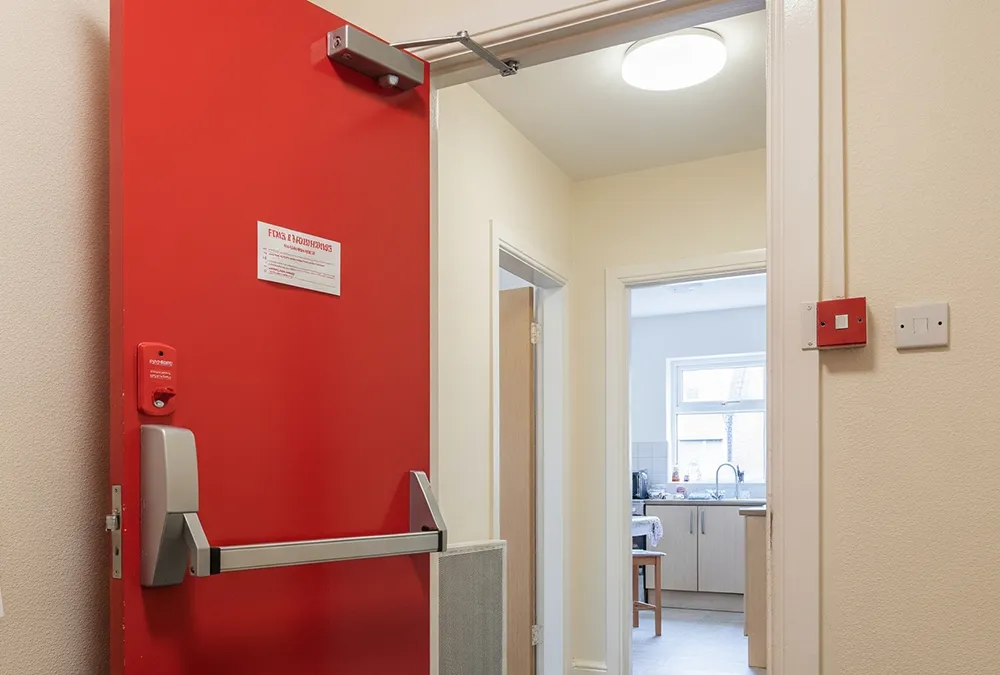
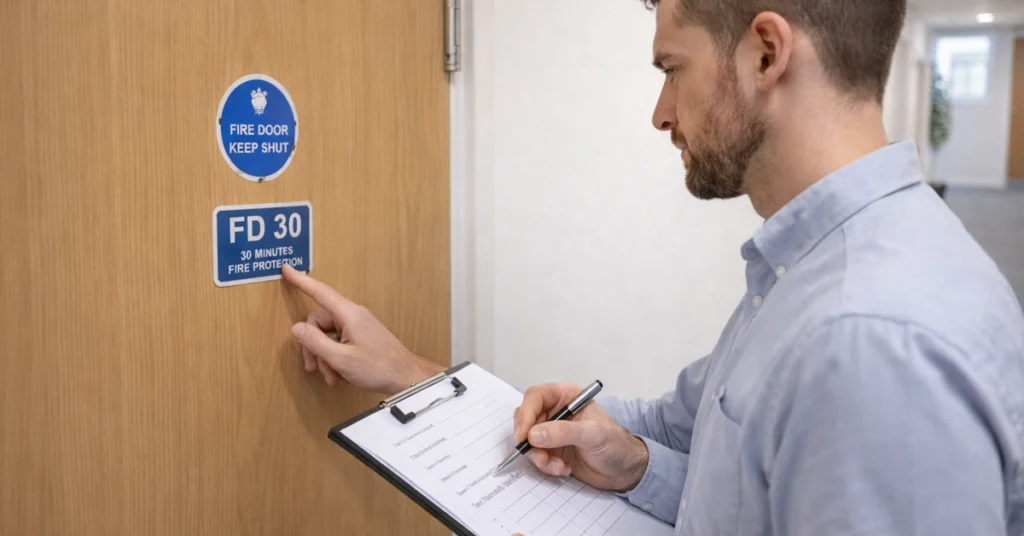
Fire Door Inspection
- Door integrity
- Intumescent seals
- Self-closing mechanisms
- Correct fire door installation
Fire Detection Systems
- Alarm grade assessment
- Detector placement
- Maintenance record review
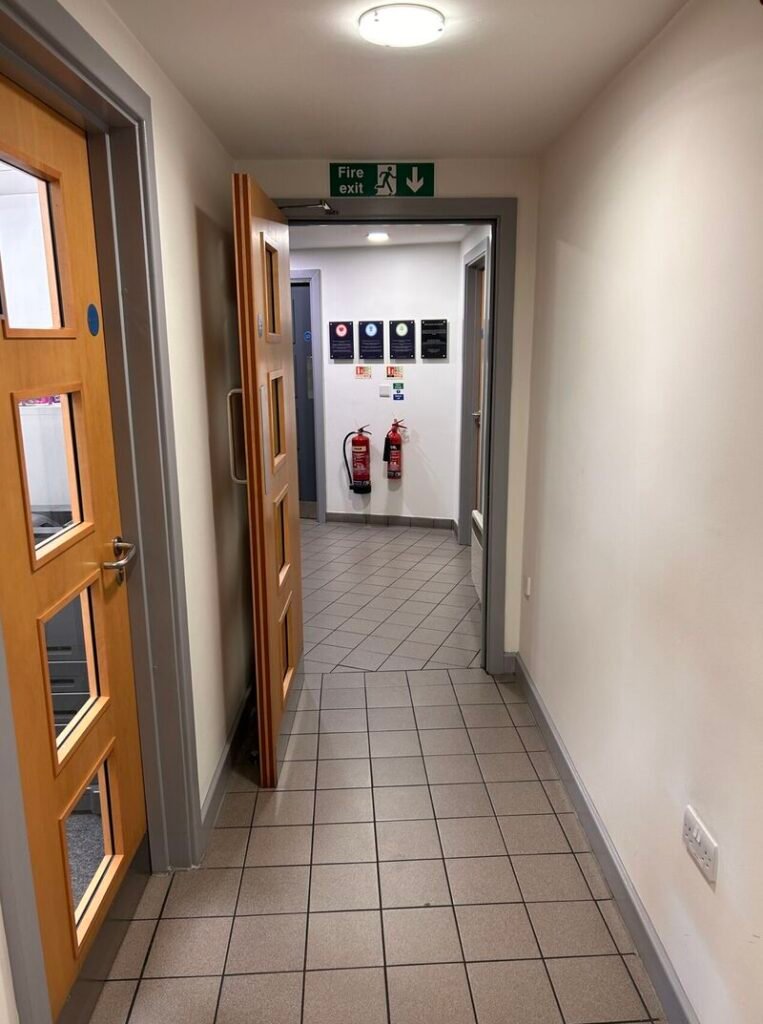
Escape Routes & Compartmentation
- Corridor condition
- Staircase protection
- Fire separation between units
Documentation & Licensing Review
- Review of previous assessments
- Identification of outstanding actions
- Structured compliance roadmap
Frequent Non-Compliance Issues Found in HMOs
Through field experience, we commonly identify:
- Inoperative self-closers
- Missing intumescent strips
- Inadequate alarm coverage
- Obstructed escape routes
- Lack of documented review
- Poor compartmentation in converted properties
Converted houses often contain hidden structural weaknesses affecting fire safety.

Fire Compliance and
HMO Licensing
Local authorities may require:
- Valid Fire Risk Assessment
- Confirmation of fire door standards
- Evidence of regular inspection
- Emergency lighting testing records
- Alarm system certification
Failure to maintain fire compliance can impact licensing status.
OFHSES assessments are structured to support licensing review processes.
How OFHSES Supports HMO Landlords
We operate a disciplined four-stage model:
Step 1 — Property Review
We assess size, occupancy level, and conversion complexity.
Step 2 — On-Site Structured Inspection
Comprehensive review aligned with HMO-specific risks.
Step 3 — Risk Categorisation
Clear prioritisation of actions.
Step 4 — Action Roadmap
Practical recommendations aligned with landlord responsibilities.
Step 5 — Ongoing Review Guidance
Clear guidance on when and how to review.
Your HMO Fire Compliance Report Includes:

- Detailed fire risk assessment
- Fire door integrity summary
- Fire door integrity failures
- Escape route review
- Risk categorisation
- Prioritised action plan
- Documentation suitable for local authority review
Reports are written clearly for landlords and property managers.
How Much Does HMO Fire Compliance Cost?
Costs depend on:
- Number of storeys
- Number of tenants
- Property size
- Complexity of conversion
Indicative starting point:
From £245 + VAT (where applicable) for small HMOs.
Use our estimator tool for structured guidance.
Structured Compliance Reduces Enforcement Risk.
OFHSES provides:
- Clear categorisation of risk
- Transparent documentation
- Practical corrective guidance
- Alignment with local authority expectations
- Accountability and traceability
We help landlords move from uncertainty to structured compliance.
Do all HMOs need a Fire Risk Assessment?
Yes. All HMOs require a suitable and sufficient fire risk assessment.
How often should an HMO FRA be reviewed?
At least annually, or when occupancy or structure changes.
Are fire doors mandatory in HMOs?
In most HMOs, fire-rated doors are required to protect escape routes.
Can landlords conduct their own FRA?
Only if competent. Many HMOs require professional assessment.

Secure Your HMO Compliance With Confidence.
Avoid penalties.
Protect tenants.
Maintain your licence.