Fire doors help slow the spread of fire and smoke, protect escape routes and support the fire compartmentation strategy of a building. However, a door may not perform as intended if it is damaged, cannot close properly, has unsuitable alterations or has defects around its frame, seals or hardware.
Understanding common fire door defects helps landlords, property managers, facilities teams and Responsible Persons identify concerns and arrange appropriate follow-up. Some issues can be resolved through suitable maintenance; others may require specialist assessment or replacement.
This guide explains the Common Fire Door Failures and defects to look for, why they matter, how findings should be recorded and what to consider after a fire door check or inspection. It is general guidance, not a substitute for assessing the requirements and condition of a particular door assembly.
Why Fire Door Condition Matters
A fire door is part of a wider fire safety system. Depending on its location and intended purpose, it may help separate a fire from an escape route, limit the movement of smoke, or maintain separation between parts of a building.
Its performance depends on more than the door leaf alone. The frame, hinges, seals where fitted, closing mechanism, hardware, glazing and installation can all be relevant. Damage or inappropriate changes to one component may affect how the complete assembly performs.
A door that looks acceptable at first glance may still need further assessment if its operation, construction or supporting evidence raises concerns. Conversely, an older door should not automatically be condemned simply because it lacks a feature that became standard in newer products. The applicable fire strategy, risk assessment, original specification and condition all matter.
For buildings in England, the Regulatory Reform (Fire Safety) Order 2005 and the Fire Safety Act 2021 form part of the wider legal framework for fire safety in relevant premises. The Fire Safety (England) Regulations 2022 introduce additional duties for certain residential buildings. These provisions have specific scopes and should not be treated as identical rules for every property throughout the UK.
What Are the Common Fire Door Defects?
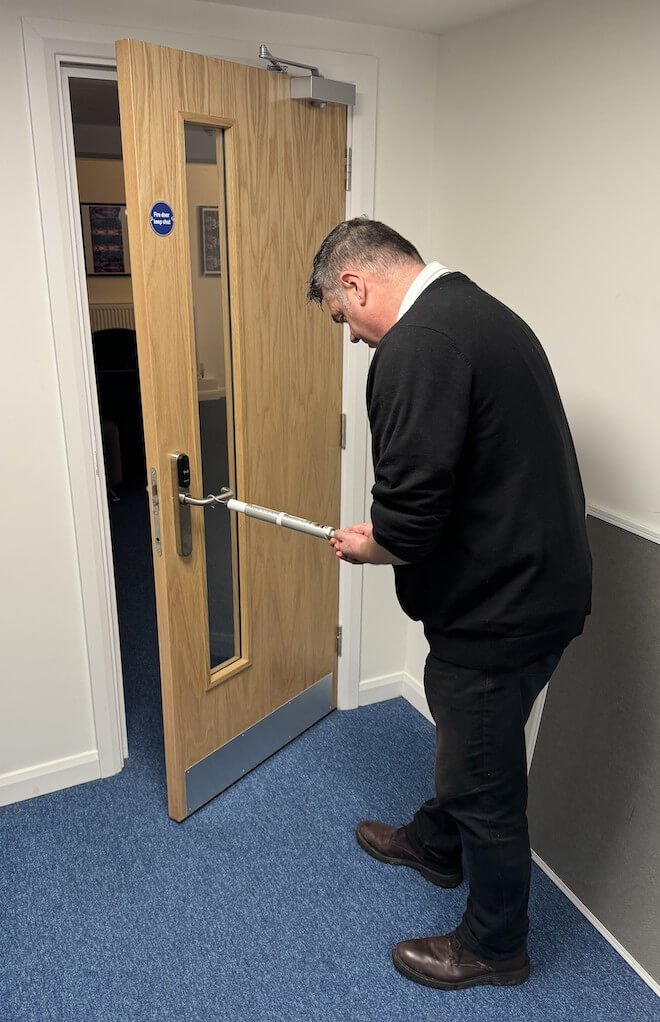
The following are examples of defects or concerns that may be identified during a fire door check or inspection. This is not a statistical ranking of the most frequent defects across UK properties.
| Potential defect | Why it may matter | Appropriate next step |
| Excessive or uneven gaps | May affect the intended fire or smoke performance of the assembly. | Record the location and measurements; compare with applicable evidence and requirements. |
| Damaged or missing seals | May affect the function of components designed for fire resistance or smoke control. | Check the door specification and seek suitable advice on compatible components. |
| Faulty self-closing device | The door may not return to its intended closed position. | Investigate the closer, alignment, latch, obstructions and resistance to movement. |
| Damaged door leaf or frame | Damage or inappropriate alterations may affect the integrity of the assembly. | Document the damage and determine whether an appropriate repair or replacement is needed. |
| Loose hinges or hardware | May affect door alignment, stability, operation or closure. | Check fixings and component suitability; arrange competent repair where necessary. |
| Unclear identification or records | May make it harder to establish the door’s original specification and suitability. | Review labels, installation information, certification records and other available evidence. |
| Damaged glazing or beads | May affect the performance of a glazed doorset. | Arrange assessment against the doorset’s specification and supporting evidence. |
| Defects around the frame or wall | May indicate an installation or wider compartmentation concern. | Consider whether a broader assessment of the surrounding construction is needed. |
| Door wedged open or obstructed | May prevent the door from performing its intended function when needed. | Remove inappropriate obstructions and address the underlying management issue. |
1. Excessive or Uneven Door Gaps
A fire door needs to fit its frame in a way that supports its intended performance. Gaps that are too large, uneven or inconsistent with the door’s specification can be a concern, particularly where they affect the door’s ability to restrict fire or smoke.
Look for:
- Uneven gaps along the top or sides of the door.
- A door leaf that appears to have dropped or become misaligned.
- Contact between the door and frame that prevents reliable closure.
- A threshold gap that appears inconsistent with the door’s intended function.
- Evidence of wear, warping or previous adjustment.
What gap is acceptable?
Government guidance for routine checks in relevant residential buildings identifies a typical benchmark of no more than 4 mm between the door and frame at the head and sides. It also explains that the bottom gap should be as small as practicable while allowing the door to operate without snagging. The appropriate assessment must still take account of the door, its installation and its supporting evidence.
Do not assume that a single measurement automatically proves compliance or failure in every setting. A visible gap, including light visible beneath a door, can be a reason to investigate, but the observation should be assessed in context.
What should happen next?
Record the location and measurement of the concern, where it is safe and appropriate to do so. Check the available specification and arrange a competent assessment if the gap appears excessive or the door is not operating correctly.
Do not automatically trim, plane or reposition a fire door. Unauthorised alterations can affect the assembly’s performance and may make the problem worse.
2. Missing or Damaged Intumescent Strips
Intumescent materials are designed to expand when exposed to heat, helping to close gaps as part of the fire door assembly. They may be fitted into the door leaf or frame, depending on the design.
Potential concerns include:
- Missing or damaged sections.
- Material that appears loose or poorly fitted.
- Evidence that the strip has been painted over or damaged during decorating.
- Replacement material that may not match the door’s original specification.
- A visible gap or damaged groove where a component may previously have been installed.
Not every fire door uses the same components. Government guidance notes that the absence of intumescent strips or smoke seals does not, by itself, establish that an existing door is unsuitable; this may depend on the door’s original design and the findings of the fire risk assessment.
If a strip is damaged or missing, do not simply install any readily available replacement. The suitability of the replacement and its compatibility with the door assembly should be established before work is carried out.
3. Missing or Damaged Smoke Seals
Smoke seals are intended to help limit smoke leakage around a door when it is closed, where this function is part of the door’s design. They are different from intumescent materials, which expand in response to heat.
Some products combine both functions in a single component. Others use separate components, and the exact arrangement varies.
Look for:
- Torn, detached or visibly worn seals.
- Sections that are missing or no longer positioned correctly.
- Evidence of paint or other material interfering with the seal.
- A seal that appears to obstruct the door from closing.
- Replacement components that may not be appropriate for the assembly.
A seal should not be replaced purely on appearance without considering the door’s design and supporting evidence. If the door is difficult to close after a seal has been installed, investigate the cause rather than removing or altering components without advice.
4. Faulty Self-Closing Devices
Where a fire door is intended or required to close automatically, its self-closing device must allow it to return to the appropriate closed position. A door that remains partly open may not provide the intended separation from fire or smoke.
Possible warning signs include:
- The door stops before closing fully.
- The latch does not engage where it is intended to do so.
- The closer is visibly damaged, disconnected or loose.
- The door moves too slowly, slams, or behaves inconsistently.
- Furniture, wedges or other obstructions prevent closure.
- The door rubs against the floor or frame.
A closer fault may not be the only cause. Misalignment, damaged hinges, an unsuitable latch, excessive friction or problems with the door itself can also prevent proper closure.
A competent person should establish the cause and decide whether adjustment, repair, replacement or further investigation is appropriate. Do not tamper with a closer or hold-open device without understanding the system and its instructions.
5. Damaged Door Leaves and Frames
Damage to a door leaf or frame may affect the integrity of the assembly. The significance depends on the nature, location and extent of the damage, the door’s construction and its intended performance.
Look for:
- Cracks, holes, splitting or damaged edges.
- Warping or other distortion.
- Loose frame fixings or visible separation around the frame.
- Damage around hinges, locks, latches or other hardware.
- Unauthorised cut-outs, drilled holes or cable penetrations.
- Repairs that appear poorly executed or inconsistent with the door’s specification.
A small mark or superficial defect does not automatically mean a door must be replaced. Equally, a seemingly minor alteration can be significant if it affects a critical part of the assembly.
Record the defect and obtain an appropriate assessment. Repairs should be suitable for the particular door and supported by relevant evidence or instructions. Where the door’s performance cannot reasonably be established after damage or alteration, a specialist assessment may be needed to determine the appropriate remedy.
6. Defective Hinges, Locks, Latches and Other Hardware
Hinges and other hardware help the door operate as intended. If a component is loose, damaged or unsuitable, the door may drop, become difficult to close or fail to latch correctly.
Check for:
- Loose, missing or damaged hinge screws.
- Hinges that show signs of wear or damage.
- A lock or latch that prevents reliable closure.
- Handles or other hardware that appear loose.
- Components that have been added or changed without supporting evidence.
- Hardware that catches on the frame or interferes with the closer.
The correct number, type and arrangement of components depend on the doorset and its design. Do not assume that every fire door has identical hardware requirements.
Where hardware is replaced, the replacement should be appropriate for the assembly and installed correctly. If the change affects the door’s operation or the evidence supporting its performance, obtain competent advice before treating the work as complete.
7. Missing or Unclear Certification Evidence
Identification labels, plugs, certification records and installation documentation can help establish the original specification of a fire door. They can be valuable when investigating defects, planning repairs or deciding whether a replacement component is appropriate.
However, documentation and physical condition are not interchangeable.
A missing visible label does not automatically prove that an existing door is unsuitable. Similarly, a label alone does not demonstrate that the door remains in good condition or that it has not been altered inappropriately.
Where identification is unclear:
- Record the door’s location and any available identifying marks.
- Look for installation records, schedules, manufacturer information or certification documents.
- Review the door’s condition and any alterations.
- Seek competent advice if the original specification or suitability remains uncertain.
- Keep the resulting assessment and corrective-action records.
Do not promise that a single certificate, label or inspection report guarantees legal compliance. The evidence must be considered alongside the installed assembly and its intended function.
8. Damaged Glazing, Beads and Other Components
Some fire doors include glazed panels, side panels or overpanels. The glazing system and its associated components must be appropriate for the assembly and intended performance.
Potential concerns include:
- Cracked or visibly damaged glazing.
- Loose or damaged glazing beads.
- Evidence of unauthorised changes to the glazing.
- Missing or damaged components around the glazed area.
- Added ventilation grilles or other alterations without supporting evidence.
- Missing or damaged signage where signage is required.
Do not assume that ordinary replacement glass or generic glazing beads are suitable for a fire-resisting doorset. The complete glazing system, including its fixing and surrounding components, may be important.
The correct response is to record the issue and arrange an assessment against the doorset’s design and supporting evidence. Where signage is relevant, check the applicable requirements for the door’s location and use.
9. Defects Around the Frame and Surrounding Construction
A fire door cannot always be assessed in isolation from its frame, installation and surrounding construction. Damage or gaps around the frame may indicate a problem with the installation or a wider fire compartmentation issue.
Look for:
- Visible gaps between the frame and surrounding wall.
- Loose or damaged frame fixings.
- Cracks or damage in the surrounding construction.
- Signs of later alterations around the doorway.
- Service penetrations or openings that may affect fire separation.
- Evidence that repairs around the frame are incomplete or unsuitable.
These observations do not automatically establish that a fire-resisting wall or compartment has failed. They may, however, indicate that the issue extends beyond routine door maintenance.
Where the surrounding construction is in question, a wider fire-stopping or compartmentation assessment may be needed. Recording the location, photographs and circumstances can help the relevant professional decide what further investigation is appropriate.
10. Doors Wedged Open or Poorly Maintained
A fire door that is intended to remain closed or close automatically may not perform its function if it is wedged open, obstructed or routinely prevented from closing.
Common management issues include:
- Wedges or other objects holding the door open.
- Furniture or stored items obstructing the door’s movement.
- Damage caused by repeated impacts.
- Residents or staff tampering with self-closing devices.
- Poor reporting of faults and delayed maintenance.
- Repeated defects that have not been followed up.
A door being wedged open is not merely a maintenance issue; it can also indicate a management or operational problem. Investigate why the door is being held open and whether an appropriate, designed hold-open arrangement is required.
Where a hold-open device is installed, its suitability and operation should be assessed against the relevant system and instructions. Do not disable safety equipment or assume that every door should be managed in the same way.
How Are Fire Door Defects Assessed?
The assessment should be appropriate to the building, the door’s function and the purpose of the inspection. A simple routine check may identify obvious damage or a door that will not close, while a more detailed technical inspection may be needed to investigate the door’s specification, measurements, alterations or supporting evidence.
An assessment may include:
- Identify the door: Record its location, type and available identifying information.
- Inspect the leaf and frame: Look for visible damage, distortion, poor repairs or unauthorised alterations.
- Check the gaps and alignment: Record relevant measurements and compare them with applicable requirements and supporting evidence.
- Examine seals and hardware: Check components that are present for visible damage, poor positioning or interference with operation.
- Assess operation: Where appropriate and safe, check whether the door operates and closes as intended.
- Record findings: Describe the defect, its location and any relevant photographs or measurements.
- Determine next steps: Identify whether maintenance, specialist investigation or replacement should be considered.
- Follow up: Record responsibility, completion and any necessary reinspection.
The depth of the assessment should not be confused with a guarantee that a door will withstand every fire scenario. An inspection provides findings and recommendations based on the scope of the work, the available evidence and the condition observed.
What Happens When a Fire Door Fails an Inspection?
The phrase “fails an inspection” can describe different situations. A routine check may identify an obvious defect that needs attention, while a more detailed inspection may identify concerns requiring technical investigation.
The appropriate response depends on the nature of the defect, the door’s purpose and the level of risk.
A sound corrective-action process should:
- Record the defect clearly, including the door’s location.
- Explain the concern and the basis for the recommended action.
- Assign an appropriate person or contractor to address it.
- Set a suitable timescale based on the risk and relevant obligations.
- Record repair, replacement or other action taken.
- Recheck the door or obtain supporting evidence where necessary.
- Update the relevant maintenance or fire safety records.
Not all defects have the same significance or require the same remedy. A door that will not close properly may require prompt attention, while an unclear identification record may require evidence gathering and further assessment. The priority should be based on the actual circumstances, not a blanket rule that every defect is identical.
Where a serious concern is identified, responsible building management should seek competent advice promptly and take appropriate interim measures based on the risk. This article does not provide a building-specific risk determination.
Can a Defective Fire Door Be Repaired, or Must It Be Replaced?
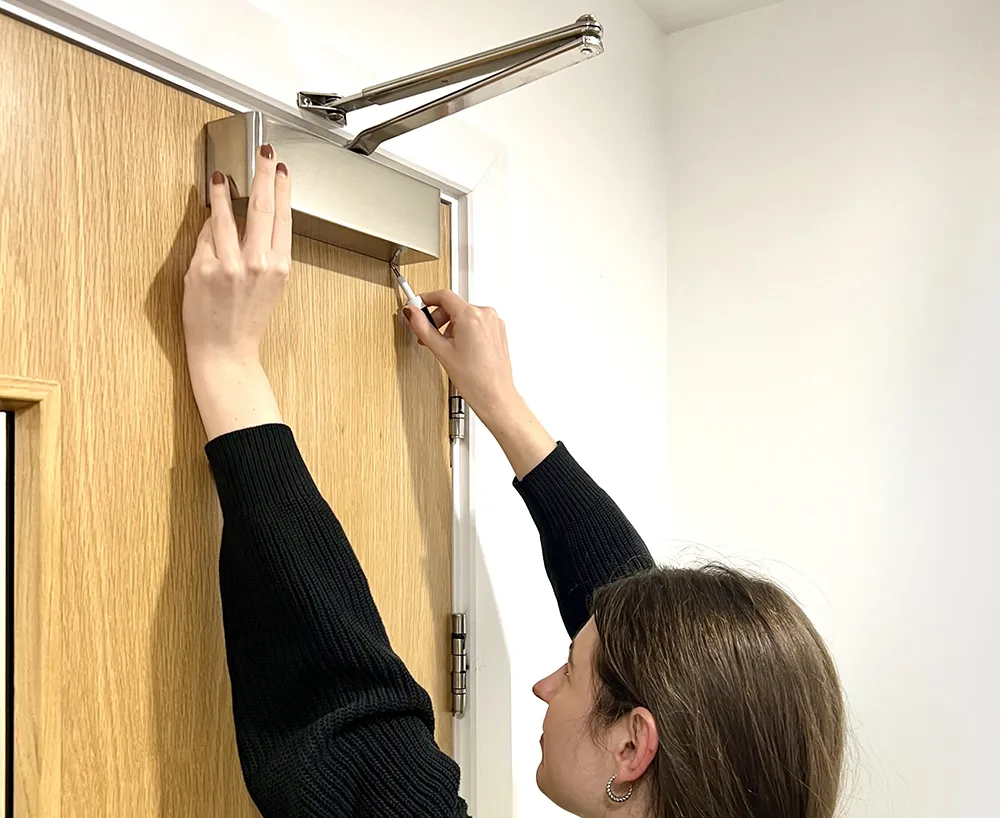
A defective fire door does not automatically need to be replaced. The appropriate remedy depends on the type and extent of damage, the door’s original specification, the suitability of available components, the quality of the proposed repair and whether the assembly’s intended performance can be established.
Repair may be appropriate where the defect is limited and a suitable repair method is supported by the relevant evidence or instructions. Replacement or a specialist assessment may be necessary where damage is extensive, alterations cannot be justified, components are unsuitable or the door’s performance cannot reasonably be established.
Before deciding, consider:
- The location and purpose of the door.
- The nature and extent of the defect.
- The door and frame’s condition.
- The available product or installation evidence.
- Whether the proposed components and repair method are appropriate.
- The findings of the relevant fire risk assessment.
- Whether the completed work can be documented adequately.
Avoid improvised repairs, unsupported component substitutions or unauthorised changes to the door leaf. Where the correct remedy is unclear, obtain advice from a competent professional familiar with fire-resisting doorsets.
How Often Should Fire Doors Be Inspected?
There is no single inspection frequency that can be applied indiscriminately to every fire door in every UK building. The appropriate arrangements depend on the building, the door’s function, applicable legal duties, the fire risk assessment and the maintenance arrangements in place.
In England, the Fire Safety (England) Regulations 2022 establish specific checking duties for qualifying multi-occupied residential buildings above 11 metres in height:
- Communal fire doors: checks must be undertaken at least every three months.
- Flat entrance fire doors: the Responsible Person must use best endeavours to undertake checks at least every 12 months and record the steps taken, including attempts to gain access where access is not granted.
The checks must include ensuring that the self-closing devices are working. These provisions do not mean that all UK properties are subject to these exact statutory frequencies, nor do they replace other fire safety, risk assessment or maintenance responsibilities.
Routine checks are also not the same as a detailed technical inspection. Government guidance explains that routine checks can identify obvious damage and operational concerns, while a fire risk assessment may need to consider whether doors remain adequate for the risk even if they do not meet standards that apply to newly installed doors.
For a particular property, review the applicable legislation and guidance, the fire risk assessment, the door’s intended function and the maintenance arrangements. Keep a record of checks and follow up defects rather than relying on a calendar interval alone.
Who Is Responsible for Fire Door Maintenance?
Responsibilities depend on the type of premises, ownership and management arrangements, the door’s location and the applicable legal framework.
The Responsible Person under the Regulatory Reform (Fire Safety) Order 2005 has duties relating to fire safety in relevant premises. In qualifying residential buildings in England, the Fire Safety (England) Regulations 2022 add specific responsibilities concerning fire doors and resident information.
Landlords, managing agents, facilities managers, contractors and residents may each have roles in reporting, maintaining or managing doors, but their legal responsibilities are not automatically identical.
Property managers should establish who is responsible for arranging checks, receiving reports, authorising remedial work and maintaining records. If responsibilities are shared or contractual arrangements are unclear, clarify who is expected to take each action. Using a contractor does not, by itself, remove a Responsible Person’s own legal obligations.
A Practical Fire Door Defect Checklist
Use this checklist as an initial record of visible concerns. It is not a certification tool or a substitute for the applicable technical requirements and a competent inspection.
- Record the building, floor and door location.
- Identify the door type and any available label or documentation.
- Check the visible condition of the door leaf and frame.
- Look for cracks, holes, warping or unauthorised alterations.
- Observe gaps and alignment; record measurements where appropriate.
- Check hinges, screws, locks, latches and other hardware.
- Examine intumescent strips and smoke seals, if fitted.
- Check the self-closing device where applicable.
- Look for obstructions or evidence that the door is being wedged open.
- Examine glazing and associated components, where present.
- Note visible concerns around the frame and surrounding construction.
- Photograph defects where appropriate and safe.
- Record recommended actions, priority and the person responsible.
- Track completion and any required follow-up or reinspection.
A useful inspection record should describe the issue rather than merely marking a door “pass” or “fail”. Clear findings make it easier to understand the concern, allocate responsibility and confirm what happened next.
Common Questions About Fire Door Defects
What are the most common fire door defects?
Potential defects include excessive or uneven gaps, damaged seals, faulty self-closing devices, damage to the door leaf or frame, loose hardware, inappropriate alterations and problems around the installation. This list describes common categories of concern; it does not rank them by national inspection frequency.
Does a missing intumescent strip mean a fire door has failed?
Not automatically. The correct assessment depends on the door’s original design, specification, installation evidence and the findings of the relevant fire risk assessment. Government guidance specifically cautions against assuming that every existing door is unsuitable because it lacks components associated with newer standards.
What is the acceptable gap around a fire door?
Government guidance for relevant routine checks identifies a typical benchmark of no more than 4 mm at the head and sides. The bottom gap is considered differently. These figures should not be applied without considering the door’s specification, installation and intended function.
What should I do if a fire door will not close properly?
Record the issue and arrange appropriate investigation. The cause could be the closer, hinges, alignment, latch, obstruction or another defect. Avoid forcing adjustments or replacing components without establishing what is suitable for the door.
Can a fire door be repaired instead of replaced?
Sometimes. The decision depends on the defect, the door’s construction and supporting evidence, the availability of suitable components and whether the proposed repair can maintain the assembly’s intended performance. Serious or uncertain damage may require specialist assessment or replacement.
Does a missing fire door label mean the door is non-compliant?
No. A missing label alone does not conclusively establish that a door is unsuitable. Other records and evidence may help identify its specification. However, a label by itself also does not prove that the installed door remains in good condition or has not been altered.
How often should fire doors be checked in England?
For qualifying multi-occupied residential buildings above 11 metres, the Fire Safety (England) Regulations 2022 require checks of communal fire doors at least every three months and require the Responsible Person to use best endeavours to check flat entrance doors at least every 12 months. Other buildings and doors may be subject to different requirements and maintenance arrangements.
What should a fire door inspection report include?
A useful report should identify the door and its location, describe the observed defect, include relevant photographs or measurements where appropriate, recommend corrective action, identify responsibility and record completion or follow-up. The report should reflect the actual scope of the inspection and should not claim to guarantee compliance.
How OFHSES Can Help With Fire Door Inspections
Identifying a potential defect is only the first step. Landlords, property managers and building operators may also need to understand the significance of the finding, decide what further investigation is appropriate and organise suitable corrective action.
OFHSES provides fire safety consultancy and fire door inspection services. A suitable inspection can help document observed conditions, identify concerns and provide a clearer basis for planning follow-up work. The appropriate scope will depend on the property and the service agreed.
If you manage a residential block, HMO or commercial property and have concerns about the condition of its fire doors, contact OFHSES to discuss your requirements.
Visit OFHSES to discuss your property and the type of support you need. An inspection should be understood in terms of its agreed scope and findings; it does not, by itself, guarantee legal compliance or prevent enforcement action.
Conclusion: Identify, Record and Address Fire Door Defects
Fire door defects can affect a door’s ability to perform its intended function, but not every visible concern has the same significance or requires the same remedy. The appropriate response depends on the defect, the door assembly, its location and the applicable fire safety requirements.
Landlords and building managers should record concerns clearly, arrange suitable assessment and remedial work, and follow up to establish that agreed actions have been completed. Where the door’s specification or the suitability of a repair is uncertain, competent advice can help determine the next step.
For further guidance, consult the relevant legislation and official fire door guidance, and seek professional support where the condition or performance of a door cannot be established confidently.