Fire doors are an important part of a building’s fire safety arrangements. When correctly specified, installed and maintained, they help limit the spread of fire and smoke, protect escape routes and support the building’s compartmentation strategy.
Over time, however, fire doors can develop defects through everyday use, wear and tear, poor maintenance, alterations or unsuitable repairs. Damage to the door leaf, problems with the frame, a self-closing device that no longer works properly or gaps that affect the door’s fit may all warrant further investigation.
Understanding common fire door defects helps landlords, property managers, facilities teams and other Responsible Persons recognise potential problems and arrange appropriate action.
This guide explains the defects to look for, why they matter, how to approach corrective work and when a more detailed professional assessment may be necessary.
Why Do Fire Door Defects Matter?
A fire door is part of a wider fire safety system. Its performance depends on more than the door leaf alone: the frame, hinges, closing mechanism, hardware, seals where specified, surrounding construction and installation all contribute to how the complete doorset performs.
A defect may affect the door’s ability to close, fit its frame or provide the fire and smoke resistance required for its location.
Potential consequences include:
- Fire or smoke spreading more readily between areas.
- Smoke entering a protected corridor or escape route.
- A self-closing door remaining partly open.
- Damage or alterations undermining the door’s intended performance.
- Uncertainty about whether the existing door remains suitable for its purpose.
Not every visible defect has the same level of significance. Findings should be assessed in context, taking account of the door’s intended function, its condition, the building’s fire risk assessment and any relevant product or installation information.
10 Common Fire Door Defects to Look For
The following are examples of defects and conditions that may need attention during a fire door check or inspection. They are not a ranking of the most frequently reported failures across the UK.
1. Excessive or Uneven Gaps Around the Door
The clearance between a fire door and its frame is important because gaps that are too large or uneven may affect the door’s ability to restrict the passage of fire and smoke.
Potential warning signs include:
- Noticeably wide gaps at the head or sides.
- Uneven clearances along the door edges.
- A door leaf that has dropped or shifted out of alignment.
- A door that rubs against the frame or floor.
- Gaps that have changed following building movement or repairs.
Government guidance refers to a 4 mm benchmark for gaps at the head and sides in the context of its fire door checking guidance. The bottom gap is considered differently and should be as small as practicable while allowing for normal operation and avoiding snagging. The appropriate assessment must take account of the relevant door and its circumstances.
What should happen next? The door’s alignment, hinges, frame and clearances should be assessed. Adjustment or repair may be appropriate, but any work must preserve the door’s intended fire performance. Do not cut or plane a fire door simply to correct a gap without confirming that the proposed work is suitable.
2. Damaged, Missing or Unsuitable Seals
Some fire doors incorporate intumescent strips, smoke seals or combined strip-and-seal products. These components have specific functions and should be considered according to the doorset’s design and requirements.
Potential problems include:
- A seal that is visibly torn, crushed or detached.
- Sections that have become loose or damaged.
- A seal that appears to have been painted over or obstructed.
- A component that has been replaced with an unsuitable product.
- Damage around the groove or area where a seal is fitted.
Intumescent materials expand when exposed to heat and can help close gaps around a door. Smoke seals are intended to limit smoke leakage under the conditions for which they are designed.
Important: The absence of a strip or smoke seal does not, by itself, establish that every existing fire door is unfit for purpose. Current government guidance specifically cautions against this assumption, particularly when considering existing flat entrance doors. The door’s original specification, condition, location and assessed fire performance must be considered.
What should happen next? Check the relevant door specification and obtain competent advice where necessary. Any replacement component should be suitable for the doorset and installed in accordance with the relevant instructions.
3. Faulty or Ineffective Self-Closing Devices
Where a fire door is intended to self-close, the closing mechanism must operate effectively. A door that remains open or fails to close fully may not provide the protection expected of it.
Warning signs include:
- The door stops before reaching the frame.
- The latch does not engage where the design requires it.
- The door closes inconsistently from different opening positions.
- The closer is visibly damaged, loose or leaking.
- The mechanism has been disconnected, obstructed or incorrectly adjusted.
A door may fail to close because of closer problems, hinge damage, frame distortion, floor friction, latch resistance or other mechanical issues.
What should happen next? Check the door’s closing action in a safe and appropriate manner. Investigate the underlying cause rather than assuming the closer itself must be replaced. Where a defect affects fire safety, arrange suitable corrective work promptly.
4. Damaged or Distorted Door Leaf
The door leaf is the moving panel within the doorset. Cracks, splits, holes, severe damage or distortion may affect its integrity.
Examples include:
- Cracks or splits in a timber door.
- Holes created for cables, locks or other fittings.
- Damage to the door edge.
- Warping that prevents the door from fitting correctly.
- Unauthorised cutting or other modifications.
- Damage caused by impact or repeated misuse.
Not all surface marks or minor cosmetic defects have the same implications. The significance depends on the material, construction, location and extent of the damage.
What should happen next? Document the defect and obtain a competent assessment if it could affect the door’s performance. Do not fill, drill, cut or modify a fire door using an ordinary repair method unless its suitability has been established.
5. Loose, Damaged or Unsuitable Hinges and Hardware
Hinges and other hardware help the door remain aligned and operate as intended. Loose fixings or unsuitable replacement components can affect its movement and closing action.
Inspect for:
- Loose or missing hinge screws.
- Damaged hinges or fixings.
- A door that has dropped or become misaligned.
- Hardware that appears damaged or unsuitable.
- Replacement locks, handles or other fittings that may have affected the door.
- Signs of improvised repairs.
The correct hardware depends on the particular doorset and its requirements. A component that physically fits is not necessarily appropriate for a fire door.
What should happen next? Identify the cause of the problem and confirm that any replacement hardware is suitable for the doorset. Repairs should not compromise its intended performance.
6. Damaged Door Frame or Surrounding Construction
The frame and its connection to the surrounding wall are important parts of the overall fire-resisting arrangement. A sound door leaf cannot compensate for a seriously compromised frame or opening.
Potential warning signs include:
- Cracked or split frame sections.
- Loose frame fixings.
- Significant gaps or deterioration around the frame.
- Signs of impact damage.
- Distortion affecting the fit of the door.
- Damage to the surrounding wall that may affect the opening’s integrity.
Some defects may be visible during a routine check, while others may require closer investigation.
What should happen next? Assess the door, frame and surrounding construction together. Where the condition of the wall or the installation is uncertain, seek an appropriately competent specialist rather than treating the issue as a simple cosmetic repair.
7. Damaged Glazing or Glazing Components
Where a fire door contains glazing, the glass, glazing system and associated components must be suitable for the intended doorset.
Potential problems include:
- Cracked or broken glass.
- Damaged glazing beads or retaining components.
- Loose or visibly displaced glazing.
- Evidence of an unsuitable replacement.
- Damage around the glazing opening.
Ordinary glass should not be assumed to be suitable as a replacement for fire-resisting glazing.
What should happen next? Restrict further interference with the damaged area and obtain competent advice about the appropriate repair or replacement. Any replacement glazing and installation method must be suitable for the specific door assembly.
8. Damaged Letterboxes, Locks or Other Door Openings
Letterboxes, locks, viewers, cable openings and other penetrations may affect a door’s fire performance if they are unsuitable, poorly fitted or added without appropriate consideration.
Potential warning signs include:
- A letterbox that does not close properly.
- An opening added after the door was installed.
- Unsealed or poorly finished penetrations.
- Loose or damaged lock components.
- Holes left behind after removing hardware.
- Replacement fittings of uncertain suitability.
These issues are particularly relevant when a door has been modified during refurbishment or by an occupant.
What should happen next? Establish whether the component and its installation are appropriate for the doorset. Avoid making additional holes or fitting replacement hardware without confirming suitability.
9. Doors Wedged Open or Prevented from Closing
A fire door that is required to remain closed may be ineffective if it is routinely wedged open or obstructed.
Examples include:
- Doorstops used to hold the door open.
- Wedges placed under the door.
- Furniture or stored items obstructing its movement.
- Cables or other objects preventing closure.
- A hold-open arrangement that does not operate as intended.
Some buildings use properly designed hold-open devices as part of their fire safety arrangements. These should not be confused with improvised wedges or doorstops.
What should happen next? Remove inappropriate obstructions and address the reason the door is being held open. Where an approved hold-open system is installed, its operation and suitability should be checked in accordance with the relevant arrangements.
Residents, staff and contractors should understand that fire doors must be used in accordance with the building’s fire safety procedures.
10. Missing Records or Uncertainty About the Door’s Specification
Documentation is important for managing fire safety, but it should not be confused with the physical performance of the door.
Records may include available product information, installation details, inspection findings, maintenance history and evidence of corrective work.
Potential concerns include:
- No accessible record of previous inspections.
- Unclear information about a replacement door.
- No record of significant modifications.
- Incomplete maintenance or repair records.
- Uncertainty about whether the door is appropriate for its location.
A missing label or unavailable certificate does not automatically prove that an existing door is defective. Equally, paperwork alone cannot demonstrate that a damaged or poorly functioning door remains suitable.
What should happen next? Review the available information alongside the physical condition of the door and the findings of the fire risk assessment. Where uncertainty remains about the door’s suitability, arrange a competent assessment.
Fire Door Inspection Checklist
A structured check can help landlords and building managers identify visible issues and record the action required. The following is a practical starting point, not a substitute for the relevant government guidance, a suitable fire risk assessment or a detailed specialist inspection where one is needed.
| Check | What to look for |
| Door leaf | Visible damage, holes, cracks, splits or distortion |
| Frame | Damage, looseness, distortion or concerning gaps around the opening |
| Door gaps | Uneven or excessive clearances that may affect performance |
| Hinges and fixings | Loose, damaged or missing components |
| Self-closing device | Whether the door closes fully as intended |
| Latch and hardware | Correct operation and visible damage |
| Seals, where fitted | Damage, detachment, obstruction or deterioration |
| Glazing, where present | Cracks, loose components or signs of unsuitable repair |
| Letterbox and penetrations | Damage, poor fit or modifications of uncertain suitability |
| Door use | Wedges, obstructions or inappropriate hold-open arrangements |
| Records | Findings, maintenance history and follow-up actions |
For each defect, record the door’s location, what was observed, any relevant photograph, the recommended action, who is responsible and whether the work has been completed.
Do not classify every item on this checklist as an automatic failure. The significance of a finding depends on the door, its intended role and the applicable assessment.
How Often Should Fire Doors Be Checked?

Inspection arrangements depend on the building, the fire risk assessment, the door’s role and any applicable legal duties.
In England, the Fire Safety (England) Regulations 2022 establish specific requirements for qualifying multi-occupied residential buildings:
- Communal fire doors: Where the top storey is more than 11 metres above ground level, the Responsible Person must ensure that communal fire doors are checked at least every three months.
- Flat entrance fire doors: In those qualifying buildings, the Responsible Person must use best endeavours to check flat entrance fire doors at least every 12 months and keep records of the steps taken, including attempts to gain access where access is not granted.
- Resident information: The Regulations also require relevant fire door information to be provided to residents in qualifying multi-occupied residential buildings.
These duties have a specific scope. They should not be presented as a universal statutory inspection schedule for every fire door in every building across the UK.
Routine visual checks are also different from a more detailed assessment of a door’s suitability, specification or installation. The government’s guidance explains that the basic checks do not replace periodic assessment of fire doors as part of fire safety management.
Read the official Fire Safety (England) Regulations 2022 fire door guidance.
What Should You Do If a Fire Door Defect Is Found?
The appropriate response depends on the nature and significance of the defect. A practical process is:
- Record the finding. Note the door’s location, the observed condition and any relevant photographs.
- Consider the immediate risk. Determine whether the defect may affect fire or smoke containment, closing action or the protection of an escape route.
- Arrange suitable advice. Seek competent assistance where the defect’s significance or remedy is uncertain.
- Agree corrective action. Establish the appropriate repair, adjustment, component replacement or full doorset replacement, as applicable.
- Use competent contractors. Work should be suitable for the specific doorset and should not compromise its intended performance.
- Verify completion. Check that the work has been completed appropriately and that the relevant door operates as intended.
- Update records. Keep inspection findings, repair details and follow-up actions together with the building’s fire safety records.
Where a defect may seriously undermine a door’s protective function, it should be addressed promptly. Any interim precautions should be determined by a competent person in light of the circumstances and the building’s fire safety arrangements.
Does Every Fire Door Defect Mean the Door Must Be Replaced?
No. A defect does not automatically mean the entire door must be replaced.
Depending on the circumstances, an appropriate remedy might involve adjustment, a suitable repair, replacement of a compatible component or replacement of the doorset. The correct decision depends on the door’s condition, construction, intended performance, installation and the significance of the defect.
Equally, a repair should not be accepted simply because it makes the door look better or allows it to move more freely. The work must be appropriate for a fire-resisting doorset.
The government’s guidance makes clear that an existing flat entrance door should not be replaced solely because it does not meet a newer standard for new doors, provided its fire performance remains adequate. Its suitability must be considered in the context of the building’s fire risk assessment and the door’s condition.
For more complex defects, obtain advice from a suitably competent fire door professional.
Who Is Responsible for Fire Door Maintenance?
Responsibility depends on the building, the applicable legislation, ownership and management arrangements, and who has control of the relevant premises or areas.
Depending on the circumstances, responsibilities may involve:
- The Responsible Person under applicable fire safety legislation.
- Building owners or freeholders.
- Managing agents or property managers.
- Landlords and employers.
- Contractors undertaking inspection, maintenance or repair.
- Residents, who may need to follow fire safety instructions and report damage.
The Responsible Person should ensure that applicable fire safety duties are addressed and that identified issues are followed up. A contractor’s inspection report can support this process, but commissioning an inspection does not automatically transfer or discharge the Responsible Person’s legal responsibilities.
For relevant residential buildings in England, see the official Fire Safety (England) Regulations 2022.
How OFHSES Can Help With Fire Door Inspections
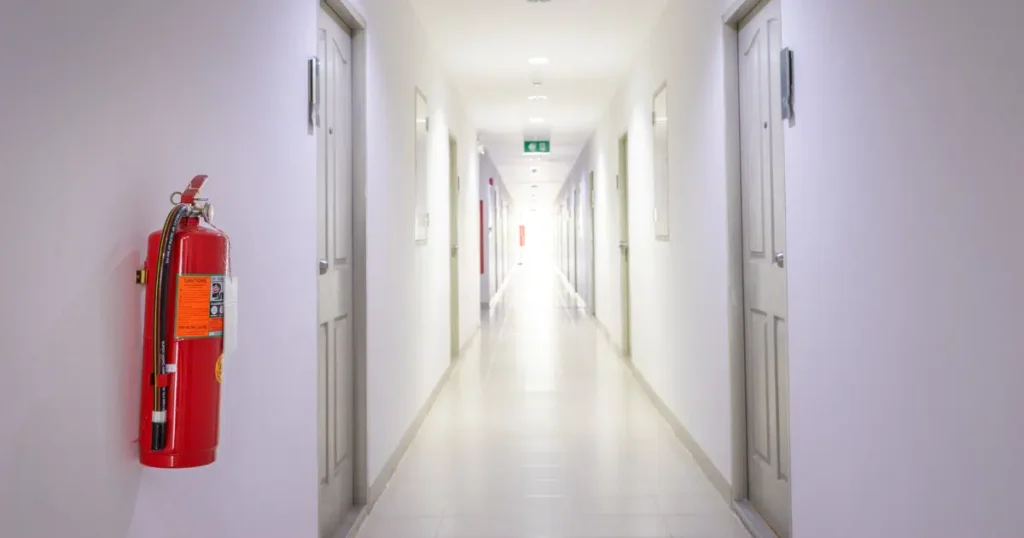
Fire door defects can be difficult to assess when there is uncertainty about the door’s specification, installation, condition or role in the building’s fire safety strategy.
OFHSES provides fire door inspection services intended to help property owners and managers understand the condition of their doors and identify issues requiring attention.
Depending on the scope agreed, an inspection may include a review of the door leaf and frame, visible hardware, closing action, gaps, seals where fitted, available records and documented findings.
A structured report can help responsible parties understand what was observed, prioritise corrective actions and keep track of follow-up work. The scope of the inspection should be agreed in advance, and any complex or uncertain defect may require further specialist assessment.
Find out more about OFHSES fire door inspection services.
Frequently Asked Questions
What are the most common fire door defects?
Potential defects include excessive or uneven gaps, a faulty self-closing device, damage to the door leaf or frame, loose hardware, damaged seals where fitted, damaged glazing and unsuitable alterations. The prevalence of individual defects varies, and no national ranking should be assumed without supporting evidence.
What gap should there be around a fire door in the UK?
Government guidance for routine checks refers to a 4 mm benchmark for gaps at the head and sides. The bottom gap is treated differently and should be as small as practicable while allowing the door to operate without snagging. The relevant doorset specification and circumstances should be considered before deciding whether a gap is acceptable.
Does a fire door fail if it has no intumescent strips?
Not automatically. Government guidance cautions that the absence of intumescent strips or smoke seals does not by itself establish that an existing flat entrance door is unfit for purpose. The door’s suitability must be considered in context.
What happens if a fire door does not close properly?
The cause should be investigated because a door that fails to close fully may not provide the expected protection. The issue could involve the closer, hinges, latch, frame, alignment or floor clearance. Appropriate corrective action should be arranged.
Can a damaged fire door be repaired?
Sometimes. The appropriate remedy depends on the type and extent of damage and the door’s specification. Repairs must be suitable for the doorset and must not compromise its intended performance. Some defects may require replacement.
How often must fire doors be checked?
Specific statutory checking frequencies apply to qualifying multi-occupied residential buildings in England above 11 metres: communal fire doors must be checked at least every three months, and flat entrance fire doors at least every 12 months on a best-endeavours basis. Other inspection arrangements depend on the building, risk assessment and applicable requirements.
Who can inspect a fire door?
The basic visual checks described in government guidance can be carried out by appropriately instructed staff. More detailed assessment of a door’s suitability, construction, installation or complex defects may require a suitably competent specialist.
Does a missing fire door certificate mean the door is unsafe?
Not necessarily. Missing documentation can create uncertainty, but it does not by itself prove that an existing door is unfit for purpose. The door’s condition, intended function and available evidence should be considered together.
Need Help Assessing Your Fire Doors?
If you manage a residential block, HMO, commercial premises or another building where fire doors form part of the fire safety arrangements, identifying and addressing defects is an important part of ongoing management.
OFHSES can discuss your property’s inspection needs and help you understand the scope of an appropriate fire door inspection.
Explore OFHSES fire door inspection services or contact the team to discuss your requirements.
Conclusion
Fire door defects can affect the performance of an important fire safety measure, but not every visible issue requires the same response. Door gaps, closing devices, damage, hardware, glazing, seals and alterations should all be considered in the context of the specific doorset and its intended role.
A structured approach helps building managers record findings, arrange appropriate corrective work and verify that outstanding actions have been addressed. Where the significance of a defect is uncertain, competent advice is preferable to assumptions or improvised repairs.
Maintaining useful records and following up identified issues supports responsible fire safety management over the life of the building.