
Short answer: in England and Wales, the Fire Safety Order sets no fixed review interval. The Responsible Person must review the fire risk assessment regularly to keep it up to date, and sooner if there is reason to suspect it is no longer valid or the premises, people or fire-safety arrangements have significantly changed. Many organisations also schedule an annual review as good practice, but that is a management choice, not a universal legal deadline.
This guide covers England and Wales, where the Regulatory Reform (Fire Safety) Order 2005 applies to non-domestic premises and the common parts of residential buildings. Scotland and Northern Ireland have separate fire-safety legislation.
How Often Should a Fire Risk Assessment Be Reviewed?
- No single legal interval applies to every premises.
- The assessment must remain suitable and sufficient.
- Change, or doubt about its accuracy, triggers a review.
- A scheduled review, often annual, is good practice for many premises. Higher-risk premises often justify more frequent checks.
- Sector rules (for example in housing, care or licensing) may add requirements.
OFHSES generally recommends a scheduled review at least annually for higher-risk or frequently changing premises, in addition to review after significant change. This is a good-practice recommendation, not a legal deadline.
What Does UK Law Say About Reviewing a Fire Risk Assessment?

Article 9 of the Fire Safety Order requires the Responsible Person to make a suitable and sufficient assessment of the risks to relevant persons. Article 9(3) then requires the assessment to be reviewed regularly, particularly where:
- there is reason to suspect it is no longer valid, or
- there has been a significant change, including significant changes, extensions or conversions of the premises, or changes to technical, organisational or work arrangements.
Where a review shows that changes are needed, the Responsible Person must make them. Since 1 October 2023, the Responsible Person must also record the assessment or review as soon as practicable, including the findings.
The Responsible Person is whoever has control of the premises, such as the employer, owner or managing agent. For the government’s overview of duties, see GOV.UK’s short guide for people with duties under fire safety legislation.
What the Law Requires vs What Is Good Practice
| Category | Example |
|---|---|
| Law | Review regularly; review where invalidity is suspected or significant change has occurred; amend where needed; record the review. |
| Government and local guidance | Some authorities cite LGA guidance for blocks of flats. One London council describes review every 2 years and reassessment every 4 for lower-risk newer blocks, and annual review with reassessment every 3 years for higher-risk or taller blocks. |
| Industry practice | Industry bodies suggest that for small, low-risk premises an annual review by the Responsible Person is reasonable, with a fuller reassessment every 2–3 years. |
| Professional advice | Your assessor may recommend a review date based on the risk profile of the premises. |
When Should a Fire Risk Assessment Be Reviewed?
The Order does not list every trigger. These are the situations that most often give reason to review. Some clearly amount to significant change. Others are prompts to consider whether the assessment is still valid.
When the Building Layout Changes
Extensions, new partitions, altered escape routes, refurbishment or fit-outs can change travel distances, compartmentation and fire detection. These are classic significant-change situations.
When the Use of the Building Changes
Office to residential, storage to workshop, or the introduction of activities such as cooking, hot work or hazardous substances. Use affects both the fire hazards and who is at risk.
When Occupancy Changes
This covers significantly more occupants, vulnerable occupants, changes to staffing or night-time occupation, and new tenant or resident arrangements. In HMOs, tenant turnover alone may not trigger a review, but changes to who lives where and how can. A property converted into an HMO, or one taking additional tenants, changes the risk profile materially.
After a Fire or Significant Fire-Safety Incident
A fire, or a serious near miss such as a failed alarm or a blocked exit, can give reason to suspect the assessment missed something. A fire in the shared parts of a building is one example given by a London council. It is a prompt to reconsider the assessment, not an automatic statutory requirement.
When Fire-Safety Systems or Measures Change
Alarm or emergency lighting upgrades, fire door replacement, compartmentation repairs and new evacuation plans can all affect whether the assessment still matches reality.
When Significant Deficiencies Are Identified
Defects found during checks, such as repeated fire door failures, can justify reassessment. See our guide to common fire door failures identified in UK inspections: https://ofhses.com/common-fire-door-failures-identified-in-uk-inspections/
When Legal Requirements or Guidance Change
Not every amendment invalidates an existing assessment. Consider whether the change is relevant to your premises, for example the 2022 fire safety regulations for residential buildings.
Review vs Reassessment: What’s the Difference?
The Order does not define these terms, so treat them as practical concepts.
- Review: checking whether the existing assessment is still accurate and acting on any differences.
- Reassessment: a fuller new assessment. It is appropriate where circumstances have materially changed, the original is no longer sufficient, significant new risks have emerged, major building works have occurred, or fire-safety arrangements have substantially changed.
A review often takes less time than a new assessment, so it can be done more often. If a review shows the assessment no longer holds, move to reassessment.
Does a Fire Risk Assessment Need to Be Reviewed Every Year?
Not as a universal legal requirement. The Order requires regular review without fixing a period, and other sources agree. Annual review does make sense where risk is higher, occupancy is vulnerable, or conditions change often. Some licences or sector arrangements may specify intervals, so check yours.
An annual date on its own does not prove compliance. A fire risk assessment is not compliant simply because someone has put a new review date on the document. What matters is whether the hazards, people and controls it describes still match reality.
Fire Risk Assessment Reviews for HMOs
Review whenever layout, number of occupants or letting arrangements change. Check shared escape routes, fire doors, alarms and emergency lighting. Licence conditions vary by local authority and licensing regime, so confirm the requirements that apply to your property. See HMO fire safety requirements and HMO fire compliance in London.
Fire Risk Assessment Reviews for Care Homes
Resident dependency, staffing levels and night cover change often, and they directly affect evacuation. Review when resident needs change, staffing models change or compartmentation is altered. See progressive horizontal evacuation explained for care homes.
Fire Risk Assessment Reviews for Commercial Premises
Consider new machinery, changes in storage or stock, altered working hours or shift patterns, new hazardous substances, headcount changes and building alterations. Annual review combined with review after operational change is a sensible approach for many commercial premises.
What Should a Review Actually Check?
A proper review is more than updating a date. It should test the assessment against the building as it is now.
- Previous actions: confirm earlier recommendations were completed, and chase any that were not.
- Building: layout, use, occupancy, structural changes.
- Hazards: ignition sources, combustibles, storage, electrics, heating, cooking, hazardous substances.
- Precautions: alarms and alarm test records, emergency lighting, extinguishers, fire doors, compartmentation, escape routes, signage.
- Management: training, evacuation procedures, testing and maintenance, records, assigned responsibilities.
- People: employees, residents, visitors, contractors, and anyone needing assistance. Re-evaluate occupancy risk.
What If the Review Identifies New Risks?
- Identify the issue.
- Assess how significant it is.
- Decide appropriate control measures.
- Assign responsibility.
- Set priorities.
- Complete remedial work.
- Update the documentation.
- Monitor, and review again as appropriate.
What Should Be Recorded?
The law now expects a record of each review. Useful content includes the date, the reason for the review, changes identified, findings, updated risks, actions with owners and completion status, and supporting evidence. Retention periods vary with circumstances, so ask your assessor or adviser what applies to you.
What Happens If You Do Not Keep Your Assessment Under Review?
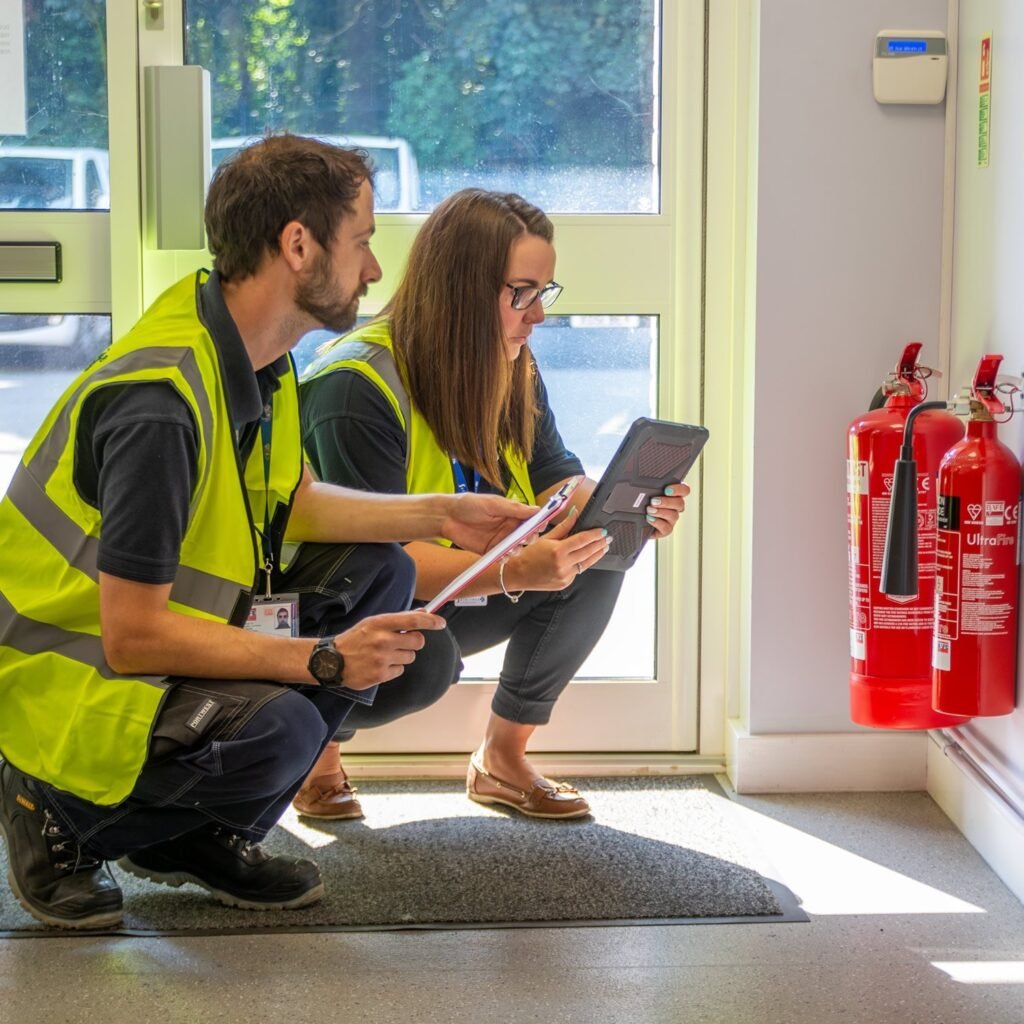
The practical risk is an assessment that no longer reflects the building, so hazards and vulnerable occupants go unaddressed. From a compliance view, failing to meet Article 9 duties can lead to enforcement action. The Order provides for enforcement, prohibition and alterations notices. Government guidance says enforcement should be proportionate to risk, and prosecution is possible for serious breaches or non-compliance with a notice. None of these is an automatic consequence of one overdue review. Without current records, it is also harder to demonstrate effective fire-safety management.
For context on why this matters: in England, fire and rescue services attended 641,227 incidents in the year ending March 2026, up 5.8% on the year before, and there were 254 fire-related fatalities in 239 fatal fires, compared with 280 in 255 the previous year (GOV.UK, Fire and rescue incident statistics, year ending March 2026). These figures cover all incident types, not only premises with a Fire Safety Order duty.
Fire Risk Assessment Review vs Fire Door Inspection
A fire door inspection checks the doors. An FRA review looks at the whole fire-safety picture. Door findings feed into the review, for example repeated failures that point to maintenance or management gaps. See What Happens During a Fire Door Inspection? and Fire Door Inspections: A Guide for Building Operators.
Practical Example
A commercial unit is refurbished. An internal partition is added, a storage mezzanine is installed and the alarm system is extended. The existing assessment predates all of this, so this is a significant change under Article 9(3).
The review should check:
- escape routes and travel distances
- detector coverage
- compartmentation around the mezzanine
- storage and combustible load
- emergency lighting and signage
- evacuation arrangements
The Responsible Person then updates the assessment, records the review and sets dated actions with owners. This example is illustrative, not a client case.
What a Professional Review Involves
OFHSES conducts structured fire risk assessment reviews that include:
- verification of previous findings
- an updated inspection
- risk re-categorisation
- a revised action plan
- clear documentation suitable for audit
When to Get Professional Help
Specialist support is worth considering where the premises have changed, the building is complex, significant risks were identified, earlier recommendations remain unresolved, or the Responsible Person needs a structured review. If you are comparing providers, see Choosing a Fire Risk Assessment Provider: What to Look For. For local guidance, see fire risk assessment in Romford.
Need a professional fire risk assessment review? If your premises have changed, your building is complex, or earlier recommendations remain open, OFHSES can help you review your assessment and agree clear next steps. Speak to OFHSES
Frequently Asked Questions
How often should a fire risk assessment be reviewed? Regularly, with no fixed legal interval, and sooner if it may be invalid or significant change has occurred.
Is an annual fire risk assessment review required? Not as a universal legal requirement. It is common good practice, and some licences or sector arrangements may specify intervals.
What triggers a fire risk assessment review? Reason to suspect the assessment is no longer valid, or significant change to the premises, use, occupancy or fire-safety arrangements.
Does a fire risk assessment expire? Not in law. The assessment may state a recommended review date.
Does a fire risk assessment need to be updated after a fire? A fire can give reason to suspect the assessment is no longer valid, so reconsider it. The legal test is validity, not the event itself.
Does a change of use require a new fire risk assessment? It is likely a significant change requiring review, and a fuller reassessment is often appropriate.
Do HMOs need an annual fire risk assessment? Not by the Order itself. Licence conditions and local requirements may differ.
Who is responsible for reviewing a fire risk assessment? The Responsible Person.
Can a fire risk assessment be reviewed remotely? A desktop check of documents can help, but reviewing physical conditions generally needs a site visit. This is a judgement for your assessor.
What is the difference between reviewing and updating a fire risk assessment? A review checks whether the assessment is still valid. An update amends it where the review found changes were needed.