
Introduction
Houses in Multiple Occupation (HMOs) must have appropriate fire safety arrangements to protect residents, provide safe escape routes and reduce the risk of fire spreading between rooms and floors. For landlords in England, understanding HMO fire safety requirements is essential when preparing a property for occupation, applying for a licence, carrying out refurbishment or responding to concerns raised by a local authority.
However, there is no single fire safety specification that automatically applies to every HMO. The measures required depend on factors such as the property’s layout, number of occupants, number of storeys, existing fire-resisting construction, escape arrangements, applicable legislation and local authority licensing conditions.
Depending on the property, fire precautions may include a suitable fire detection and alarm system, fire-resisting doors, protected escape routes, emergency lighting, fire separation and appropriate maintenance procedures.
Landlords must understand which legal duties apply, identify deficiencies and take appropriate action. A fire safety checklist can help organise these responsibilities, but it cannot replace a property-specific assessment.
This guide explains the main HMO fire safety requirements in England, the legislation landlords should understand, common compliance problems and practical steps for managing fire safety.
What Is an HMO?
A House in Multiple Occupation is generally a property occupied by at least three tenants who form more than one household and share facilities such as a kitchen, bathroom or toilet.
A household generally consists of one person or members of the same family living together. For example, three unrelated people sharing a house may constitute three households.
Under the general mandatory licensing rules in England, a large HMO usually requires a licence where it is occupied by five or more people forming more than one household and sharing facilities, subject to the applicable legal criteria.
Smaller HMOs may also require a licence under additional licensing schemes introduced by individual local authorities.
Landlords should therefore confirm the licensing position with the council responsible for the property’s location rather than assuming that a property falls outside licensing requirements because it has fewer than five occupants.
Official guidance is available through the GOV.UK HMO licensing guidance.
Why does HMO status matter for fire safety?
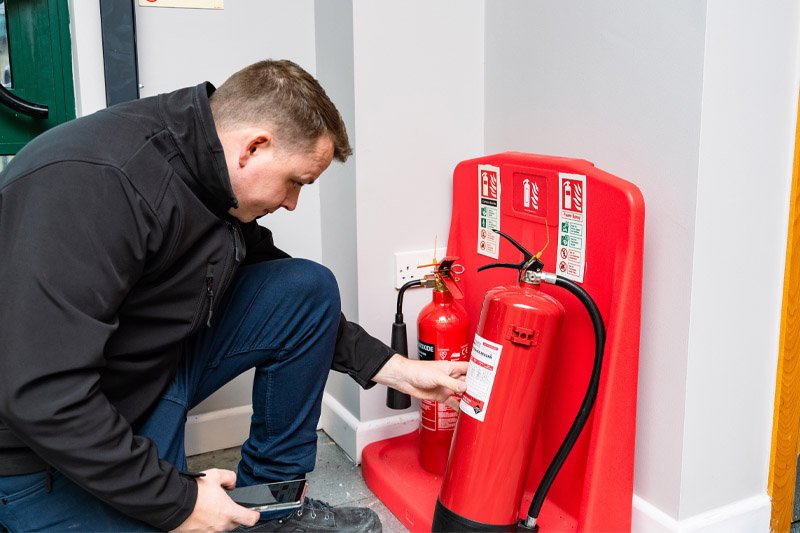
A property designed for one household may present additional challenges when occupied by several unrelated tenants. Residents may have separate sleeping rooms, share corridors and staircases, and be unfamiliar with one another’s routines.
The building’s configuration can also affect how quickly occupants recognise a fire and reach a place of safety.
For this reason, landlords should consider the relationship between occupancy, escape routes, fire detection, fire-resisting construction and the management of shared spaces.
HMO licensing and fire safety are related, but they are not interchangeable. Obtaining a licence does not remove the need to comply with other applicable fire safety and housing obligations.
What Fire Safety Laws Apply to HMOs in England?
Several legal frameworks may be relevant to an HMO. Understanding their different purposes helps landlords identify the correct requirements.
Regulatory Reform (Fire Safety) Order 2005
The Regulatory Reform (Fire Safety) Order 2005 establishes fire safety duties for premises within its scope.
It requires the responsible person to take appropriate fire precautions, including undertaking a suitable and sufficient fire risk assessment where the Order applies.
In relevant premises, duties can include identifying fire hazards, assessing risks to relevant persons, providing appropriate fire precautions, maintaining fire safety equipment and ensuring suitable arrangements for emergency procedures.
The responsible person is generally the employer, person in control of the premises or another person who has the relevant responsibility under the Order. More than one person may have duties where responsibilities are shared.
The Order does not apply identically to every part of every residential property. Its application to HMOs must be considered in light of the premises, their use and the distinction between private domestic accommodation and areas within the Order’s scope.
Landlords and managing agents should establish which duties apply to their specific property rather than assuming that one legal interpretation covers every HMO.
Fire Safety Act 2021
The Fire Safety Act 2021 clarified the application of the Fire Safety Order to certain residential buildings containing multiple domestic premises.
In relevant buildings, the Fire Safety Order covers the building’s structure and external walls, including relevant doors and windows, as well as common parts and doors between domestic premises and common parts.
Its relevance depends on the building and the applicable legal provisions. Landlords responsible for converted residential buildings should understand how the Act affects their fire safety responsibilities.
Fire Safety (England) Regulations 2022
The Fire Safety (England) Regulations 2022 introduce additional requirements for responsible persons in specified residential buildings.
These include provisions concerning fire safety information for residents and additional measures for certain buildings, with requirements varying according to building type and height.
They should not be interpreted as a universal checklist for every HMO. Landlords should establish whether the regulations apply to their building and whether any additional duties arise from its configuration.
Housing Act 2004 and HMO licensing
The Housing Act 2004 provides the framework for HMO licensing and housing standards, including assessment of hazards that may affect occupants’ health and safety.
Local authorities may impose relevant licence conditions concerning fire precautions, property management and maintenance. Additional licensing schemes may also apply in designated areas.
The council’s requirements should be checked alongside the national legislation applicable to the property.
Legal requirements versus guidance
| Source | What it means for landlords |
| Legislation | Establishes legal duties and requirements within its scope. |
| Government fire safety guidance | Helps explain how relevant legal duties may be met. |
| British Standards and technical guidance | May inform appropriate design, installation, maintenance or assessment; their legal relevance depends on the circumstances. |
| Local authority licensing conditions | May impose additional requirements on a particular HMO. |
| Professional recommendations | May identify improvements appropriate to the property’s risks, even where a specific measure is not universally prescribed. |
The practical lesson is to identify the legal duties and property-specific conditions first, then determine the fire precautions needed to meet them.
Do HMO Landlords Need a Fire Risk Assessment?
A fire risk assessment is an important part of managing fire safety, but the precise legal duty depends on the premises and the legislation that applies.
Where the Regulatory Reform (Fire Safety) Order 2005 applies, the responsible person must ensure that a suitable and sufficient fire risk assessment is undertaken.
The assessment should identify fire hazards, consider who may be harmed, evaluate existing precautions and determine what additional measures are necessary.
For an HMO, the assessment may consider:
- Potential sources of ignition and combustible materials.
- Fire detection and warning arrangements.
- Escape routes, staircases and final exits.
- Fire-resisting doors and compartmentation.
- Emergency lighting where appropriate.
- The needs and circumstances of occupants.
- The management and maintenance of fire safety measures.
- Emergency procedures and arrangements for responding to identified defects.
The findings should inform a practical action plan, with deficiencies prioritised according to the risks involved.
Where the applicable legislation requires significant findings to be recorded, those records must be maintained accordingly. Other documentation may also be required by licensing conditions or relevant guidance.
For more information, see OFHSES’s guide to how often a fire risk assessment should be reviewed in the UK.
Who is responsible for the assessment?
Responsibility depends on the legal framework, control of the premises and the duties assigned to the relevant parties.
A landlord may have responsibilities for the property and its fire precautions, while a managing agent may perform agreed management tasks. Where duties overlap, each responsible party should understand their own obligations.
Appointing a contractor to carry out an assessment does not automatically remove the responsible person’s legal duties.
The person undertaking the assessment should have the appropriate knowledge, training and experience for the complexity of the premises.
When should a fire risk assessment be reviewed?
There is no single review interval that should be assumed appropriate for every HMO.
A review should be considered when the existing assessment may no longer be valid or when circumstances change. Relevant triggers may include:
- Changes to the building layout or escape routes.
- Conversion, refurbishment or structural alterations.
- A change in the number or circumstances of occupants.
- Installation or modification of fire safety equipment.
- Discovery of significant defects.
- A fire, near miss or other event that raises new concerns.
- Changes to applicable requirements or licensing conditions.
A review is not simply a matter of updating a date. It should establish whether the assessment remains suitable and whether additional action is necessary.
HMO Fire Alarm Requirements
An appropriate fire detection and warning arrangement is a central consideration when assessing HMO fire safety.
The system should be suitable for the building, its occupancy, the risk identified and the applicable legal requirements or licensing conditions.
Depending on the property, this may involve smoke detectors, heat detectors, interlinked alarms or a more comprehensive fire alarm system.
What type of fire alarm does an HMO need?
There is no safe basis for assuming that every HMO requires exactly the same alarm grade or system configuration.
The appropriate arrangement may depend on:
- The number of storeys and bedrooms.
- The building’s layout and means of escape.
- The presence of protected stairways or corridors.
- The relationship between sleeping accommodation and shared areas.
- The applicable local authority standards.
- The findings of the fire risk assessment.
- Relevant technical guidance and system design requirements.
A smaller shared house may have different requirements from a large HMO created through the conversion of a complex building.
Landlords should verify the applicable specification before purchasing equipment or commissioning installation work. Where the required system is unclear or technically complex, a competent fire safety professional or alarm system designer should be consulted.
Smoke alarms and heat detectors
Smoke detectors identify smoke and can provide early warning of a developing fire. Heat detectors respond to a rise in temperature and may be appropriate in locations where the risk assessment or system design indicates they are suitable.
The location, type and interconnection of detectors should be determined by the relevant requirements and the property’s circumstances.
Simply installing individual alarms without considering the overall arrangement may leave important gaps in detection or warning.
Fire alarm maintenance
Landlords and responsible persons should ensure that fire detection and warning arrangements remain operational and that applicable inspection, testing and maintenance duties are met.
A practical maintenance process should identify:
- Who is responsible for routine checks.
- How faults are reported and recorded.
- How defective equipment is repaired or replaced.
- What maintenance is required by the system manufacturer and applicable guidance.
- Whether any licence conditions specify additional arrangements.
The system’s installation documentation, maintenance records and assessment findings can help demonstrate how fire safety responsibilities are being managed.
Fire Door Requirements in HMOs
Fire doors are designed to resist fire and, where the door assembly provides the relevant protection, help limit fire and smoke spread between areas.
Their required performance and location depend on the building’s fire strategy, construction and applicable requirements.
A landlord should not assume that one fire door rating or specification automatically applies to every door in every HMO.
Where may fire doors be needed?
Fire-resisting doors may be important between sleeping accommodation and shared escape routes, around protected staircases and in other locations identified by the relevant fire strategy or assessment.
The precise locations and performance requirements should be established for the individual property.
A door’s appearance alone cannot confirm its fire performance. The door leaf, frame, seals, glazing, hardware and installation may all affect how the assembly performs.
What should landlords check?

Relevant checks may include:
- Door leaf and frame: Look for damage, deterioration, unsuitable alterations or poor fitting.
- Self-closing devices: Check that required closers are present, functional and capable of closing the door correctly.
- Smoke and intumescent seals: Confirm that appropriate seals are fitted and in serviceable condition where the door specification requires them.
- Hinges and hardware: Look for loose, damaged or unsuitable components.
- Latches: Check that the door closes and latches properly where required by its design.
- Gaps and alignment: Identify excessive or inconsistent gaps that may affect the door’s intended performance.
- Glazing: Check for damage and whether the glazing and its installation are suitable for the door assembly.
- Obstructions: Ensure that the door can close fully and is not routinely wedged open where this compromises its function.
The correct tolerances and components should be assessed against the door specification and relevant guidance rather than guessed from a generic checklist.
Why fire door inspections matter
A fire door can become less effective through everyday wear, damage, poor installation or inappropriate repairs.
A structured inspection can help identify defects, determine which corrective actions are needed and establish priorities.
Repairs or replacements should preserve the intended fire performance of the complete door assembly. Where the specification is uncertain, obtain advice from a suitably competent professional.
Read more in OFHSES’s article on common fire door failures identified in UK inspections.
Escape Routes and Means of Escape
Escape routes should enable occupants to reach a place of safety in an emergency. Their suitability depends on the property’s layout, occupancy, fire risks and applicable requirements.
In an HMO, the route may include bedroom doors, corridors, staircases, protected passages and final exits.
Keeping escape routes clear
Landlords and managers should ensure that shared escape routes are not obstructed by items such as bicycles, furniture, rubbish, stored belongings or cleaning equipment.
Obstructions can restrict movement, increase evacuation time and create additional hazards during an emergency.
Doors and exits forming part of the escape route should operate as intended, and any security arrangements should be considered alongside the need for safe escape.
Protected escape routes
A protected escape route uses suitable fire-resisting construction and doors to help protect occupants from fire and smoke for the period required by the building’s fire strategy.
The level of protection needed depends on the property. A staircase in a converted multi-storey house may present different considerations from the escape route in a small, single-storey shared property.
Where escape routes depend on fire-resisting doors, walls or ceilings, those elements must be maintained in an appropriate condition.
Final exits and evacuation arrangements
Final exits should provide a suitable way out of the building. Their accessibility, operation and relationship to the external place of safety should be considered.
Landlords and managers should also establish how occupants will receive warnings and what actions they should take if a fire occurs.
Evacuation arrangements must reflect the actual risk and building configuration. Landlords should not assume that a single evacuation approach is suitable for every HMO.
Emergency Lighting and Fire Safety Signage
Emergency lighting can help occupants identify escape routes and exits when normal lighting fails. Fire safety signage can help communicate escape directions or the location of relevant equipment where signage is required.
However, neither emergency lighting nor every type of sign is automatically required in every HMO.
Their necessity and specification should be determined by the applicable requirements, the property’s design and the findings of the relevant assessment.
Factors may include the length and complexity of escape routes, changes in level, the availability of natural light, the building’s layout and the consequences of a power failure.
Where emergency lighting is installed, the responsible person should ensure that it is appropriately maintained and tested in accordance with applicable requirements and the system’s instructions.
Where signage is provided, it should be clear, suitable for its purpose and maintained in a condition in which occupants can understand it.
Landlords should confirm whether the local authority’s HMO standards impose specific requirements for their property.
Compartmentation and Preventing Fire Spread
Compartmentation uses fire-resisting walls, floors, ceilings, doors and other construction to help limit the spread of fire and smoke.
It can be particularly important in HMOs where several occupants sleep in separate rooms and depend on shared escape routes.
Defects in fire-resisting construction can undermine the intended protection of those routes.
Common compartmentation problems
Potential defects include:
- Unsealed gaps around pipes, cables and other service penetrations.
- Damaged walls, ceilings or floors.
- Alterations that compromise fire-resisting construction.
- Poorly fitted doors or frames.
- Unprotected openings between relevant areas.
- Inappropriate materials used to fill gaps.
- Building work that has not preserved the intended fire separation.
The significance of a defect depends on its location, the construction involved and the property’s fire strategy.
Landlords should avoid treating every visible gap with an ordinary filler or sealant. Fire-stopping products must be suitable for the application and installed in accordance with the relevant system specification.
Where the integrity of a wall, ceiling or service penetration is uncertain, a competent professional should assess the construction and recommend appropriate remedial work.
Fire Safety Considerations for Different Types of HMOs
Although the same broad principles apply, the fire precautions needed can vary considerably between properties.
| Type of HMO | Important considerations |
| Shared house | Shared escape routes, sleeping accommodation, suitable detection and warning, and the condition of relevant doors and construction. |
| Converted residential property | Whether alterations have preserved suitable fire separation, whether escape routes remain protected and whether the existing layout supports safe evacuation. |
| Larger or more complex HMO | The interaction between occupants, storeys, escape routes, detection systems and fire-resisting construction. |
| HMO with occupants who may need additional assistance | Whether warning arrangements and evacuation procedures reflect the occupants’ circumstances and the risks identified. |
These categories are practical descriptions, not separate legal specifications. The correct measures must be determined by the requirements applicable to the actual building.
A property’s age or previous use does not, by itself, establish that its current fire precautions are adequate.
HMO Fire Safety Checklist for Landlords
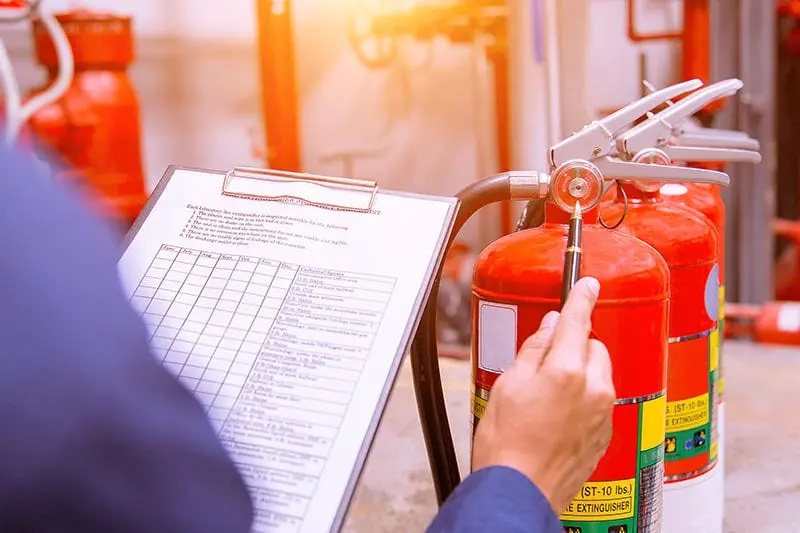
The following checklist provides a practical starting point for organising fire safety responsibilities. It is not a substitute for a suitable assessment, applicable legislation or local authority licensing conditions.
Licensing and legal responsibilities
- Confirm whether the property requires mandatory or additional HMO licensing.
- Review the licence conditions and applicable council standards.
- Establish who is responsible for each fire safety duty.
- Identify any additional requirements relevant to the building.
Fire risk assessment
- Confirm whether a fire risk assessment is legally required for the premises or relevant areas.
- Ensure the assessment is suitable for the building and its use.
- Record significant findings and required actions where applicable.
- Prioritise identified defects and assign responsibility for corrective work.
- Review the assessment when circumstances change or it may no longer be valid.
Fire detection and warning
- Confirm that the alarm arrangement meets the applicable requirements.
- Check that detectors and warning devices are suitable for their locations.
- Verify that interconnection and system operation meet the intended design.
- Maintain relevant testing, fault-reporting and servicing records.
Escape routes
- Keep shared corridors, staircases and exits unobstructed.
- Check that relevant doors operate as intended.
- Review the condition of protected escape routes.
- Ensure that evacuation arrangements are appropriate for the property.
Fire doors and compartmentation
- Identify doors that need to provide fire resistance.
- Check door condition, closing mechanisms, seals and hardware as applicable.
- Investigate damaged walls, ceilings and fire-resisting construction.
- Check service penetrations and any alterations that may affect fire separation.
- Arrange appropriate repairs and verify completed work.
Emergency lighting and signage
- Establish whether emergency lighting is required.
- Check that installed emergency lighting is maintained and tested as applicable.
- Confirm that required signage is appropriate, visible and maintained.
Records and corrective actions
- Keep relevant assessment and inspection records.
- Record maintenance, defects and remedial actions.
- Retain evidence that identified problems have been addressed.
- Review outstanding actions and arrange follow-up where necessary.
Completing this checklist does not automatically establish compliance. Each item must be considered in the context of the property’s legal obligations, risk assessment and applicable standards.
What Happens If an HMO Does Not Meet Fire Safety Requirements?
The consequences depend on the nature of the deficiency, the applicable legislation, the level of risk and the circumstances of the case.
Where relevant legal duties have not been met, the landlord or other responsible party may face enforcement action.
Possible consequences include:
- Fire safety enforcement: Where the Fire Safety Order applies, the enforcing authority may use the powers available under that legislation, which can include enforcement notices or prohibition notices in appropriate circumstances.
- Housing enforcement: A local authority may take action under housing legislation where it identifies relevant hazards or breaches of applicable housing requirements.
- HMO licensing action: Failure to meet relevant licence conditions may lead to licensing enforcement or other action permitted by law.
- Financial penalties or prosecution: These may arise where the applicable legislation provides for them and the relevant legal conditions are met.
- Restrictions on use: Serious risks may result in restrictions on occupation or use under the relevant legal powers.
These outcomes are not interchangeable, and no single consequence automatically follows from every defect.
Landlords should respond promptly to identified deficiencies. Where a notice has been served, they should understand its requirements, deadlines and any available review or appeal process.
The appropriate response may involve urgent risk reduction, professional assessment, repairs, improvements to fire precautions or changes to management procedures.
What Documents Should HMO Landlords Keep?
Good record-keeping helps landlords and managers understand the condition of their fire safety arrangements, track defects and demonstrate the action taken.
Depending on the property’s circumstances and applicable requirements, relevant records may include:
- Fire risk assessments and review records.
- Fire alarm installation, testing and maintenance documentation.
- Emergency lighting inspection and maintenance records, where relevant.
- Fire door inspection findings and records of remedial work.
- Records of fire safety defects and corrective actions.
- Relevant HMO licence conditions and council correspondence.
- Evacuation procedures and fire safety information provided to residents.
- Relevant contractor reports and completion records.
Not every document has the same statutory retention requirement. Landlords should identify which records are legally required and follow applicable licensing conditions, guidance and reasonable record-management practices.
Records should be accurate, accessible to those responsible for fire safety and updated when work is completed or circumstances change.
How Often Should HMO Fire Safety Measures Be Checked?
The appropriate frequency depends on the equipment, the building, the risk assessment, applicable legislation, technical guidance, manufacturer instructions and licence conditions.
Landlords should distinguish between routine visual checks, equipment testing, professional maintenance, inspections and formal review of a fire risk assessment.
For example, an alarm system may require routine user checks as well as scheduled servicing. Fire doors may need checks that reflect their use, condition and the property’s maintenance arrangements. Emergency lighting, where installed, may have specific testing and maintenance requirements.
These activities serve different purposes and should not be treated as interchangeable.
A formal fire risk assessment review is also different from a routine equipment check. A new defect or material change to the property may justify reviewing the assessment even if the next scheduled review date has not arrived.
For further guidance, see How Often Should a Fire Risk Assessment Be Reviewed in the UK?.
Common HMO Fire Safety Mistakes
Landlords can overlook important issues when fire safety is treated as a one-time installation task rather than an ongoing responsibility.
Common problems include:
- Assuming all HMOs have identical requirements. The correct precautions depend on the property, legal duties and licensing conditions.
- Installing alarms without verifying the required system. Equipment must be appropriate for the building and its risks.
- Ignoring damaged fire doors. Doors that do not close correctly or have unsuitable repairs may fail to provide their intended protection.
- Allowing escape routes to become obstructed. Stored belongings and poorly managed shared spaces can compromise safe evacuation.
- Overlooking fire-stopping defects. Unsealed service penetrations and alterations may undermine fire-resisting construction.
- Treating an old assessment as permanently valid. Material changes or new defects can make a previous assessment unsuitable.
- Failing to document corrective work. Without clear records, it can be difficult to track outstanding problems or establish what has been completed.
- Confusing licensing with full fire safety compliance. A licence does not necessarily establish that every separate legal duty has been met.
- Using unsuitable contractors or repair methods. Poorly selected materials or unverified repairs may fail to preserve the intended performance of fire safety measures.
A structured approach to assessment, maintenance and follow-up can help landlords identify and address these problems.
Frequently Asked Questions About HMO Fire Safety Requirements
What are the fire safety requirements for an HMO in England?
Requirements depend on the property’s configuration, occupancy, applicable legislation, fire risk assessment and local authority licensing conditions. Relevant precautions may include suitable fire detection, safe escape routes, fire-resisting doors and construction, emergency lighting where necessary, and appropriate maintenance arrangements.
Does every HMO need a fire risk assessment?
The legal duty must be considered in relation to the premises and the legislation that applies. Where the Regulatory Reform (Fire Safety) Order 2005 applies, the responsible person must ensure a suitable and sufficient assessment is undertaken. Landlords should also check housing requirements and local licensing conditions.
Do all HMOs need a Grade A fire alarm?
No universal alarm grade should be assumed for every HMO. The required system depends on the property, its risks, applicable guidance and local authority standards. Landlords should confirm the specification before installation.
Are fire doors required in every HMO?
The need for fire-resisting doors and their required performance depends on the building’s fire strategy and applicable requirements. Doors protecting escape routes or separating areas may be important, but the correct specification and locations should be established for the individual property.
Is emergency lighting required in every HMO?
No. Emergency lighting requirements depend on the building, escape routes, risk assessment and applicable requirements. Landlords should verify whether it is necessary for their property rather than relying on a universal rule.
Do HMO fire safety requirements differ by local authority?
Yes. National legislation establishes relevant legal duties, while local authorities may operate additional licensing schemes or impose applicable licence conditions. Landlords should check the requirements for the property’s specific location.
What happens if an HMO fails a fire safety inspection?
The response depends on the findings and the legal framework involved. The authority may require corrective action or use relevant enforcement powers. Landlords should review any notice carefully, address risks promptly and obtain professional advice where necessary.
How often should HMO fire safety measures be checked?
There is no single frequency that applies to every measure in every HMO. Check and maintenance arrangements should follow applicable legislation, relevant guidance, equipment instructions, the risk assessment and licensing conditions.
Who is responsible for HMO fire safety?
Responsibility depends on the applicable legislation and control of the premises. Landlords, managing agents and other responsible parties should understand their respective duties. Delegating work does not automatically remove a person’s legal responsibilities.
What should landlords do before applying for an HMO licence?
Confirm the licensing requirements with the local authority, review the property’s condition and applicable standards, identify relevant fire safety obligations, arrange necessary assessments and remedial work, and prepare the documentation requested by the council. The exact requirements depend on the local scheme and the property.
How OFHSES Supports HMO Fire Safety Compliance
Understanding HMO fire safety requirements can be challenging, particularly where a property has been converted, refurbished or adapted for multiple occupation.
A structured assessment can help landlords understand the risks associated with their premises, identify defects and determine which corrective actions require attention.
OFHSES provides fire safety-related information and support through its website. Landlords seeking assistance should confirm the availability and suitability of the relevant service for their property before commissioning work.
Depending on the services available, professional support may help with fire risk assessment, fire door inspection, identification of fire safety defects and recommendations for remedial action.
If you are preparing an HMO for occupation, reviewing fire safety arrangements before a licence application or addressing concerns identified during an inspection, begin by establishing the property’s requirements and identifying any outstanding issues.
Need help reviewing your HMO’s fire safety arrangements?
Visit OFHSES to explore the available services and contact the team to discuss your property’s needs.
A professional assessment or inspection can help identify areas requiring attention and provide a clearer basis for planning corrective work. The scope of any service should be agreed in advance, and no individual inspection or report should be treated as an automatic guarantee of legal compliance.
Conclusion: Meeting HMO Fire Safety Requirements
HMO fire safety requirements in England involve more than installing alarms or fitting fire doors. Landlords must understand the legal duties that apply to their property, maintain appropriate precautions, manage shared escape routes and address defects that could compromise occupants’ safety.
The right measures depend on the building’s design, occupancy, fire risks, applicable legislation and local authority licensing conditions. A practical checklist can support day-to-day management, but it should be used alongside the relevant assessment and verified requirements.
By reviewing fire safety arrangements, keeping suitable records and responding promptly to identified problems, landlords can take a more organised approach to protecting residents and managing their responsibilities.
Where requirements are unclear or a property presents complex risks, seek advice from a suitably competent fire safety professional and confirm any licensing requirements with the relevant local authority.
Sources and Further Reading
The following authoritative resources support the legal and practical information in this guide:
- Regulatory Reform (Fire Safety) Order 2005
- Fire Safety Act 2021
- Fire Safety (England) Regulations 2022
- Housing Act 2004
- GOV.UK: Houses in Multiple Occupation
- GOV.UK: HMO licensing
This article provides general information about HMO fire safety in England. It is not legal advice or a substitute for assessing the individual property and verifying the requirements that apply to it.