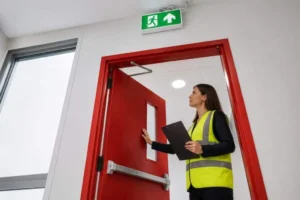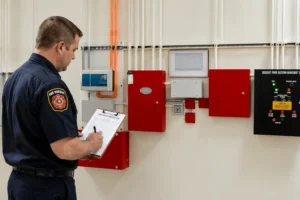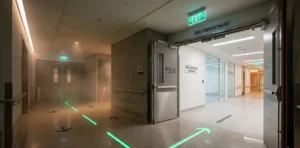

If you own or manage a house in multiple occupation (HMO) in London, preparing for fire safety compliance means understanding the requirements that apply to your property, checking that relevant precautions are suitable and maintained, and addressing any outstanding recommendations.
The exact requirements depend on factors such as the building’s layout, occupancy, escape arrangements, applicable fire safety law and the licensing conditions set by the local borough. A requirement that applies to one HMO should not automatically be assumed to apply to every shared house or converted property.
This guide explains the main areas HMO Fire Compliance in London should consider, from fire risk assessments and alarm arrangements to fire doors, escape routes, licensing and record-keeping.
If you need help understanding your property’s fire safety position, you can contact OFHSES through the booking page to discuss the appropriate assessment or inspection.
What Does HMO Fire Compliance In London Involve?
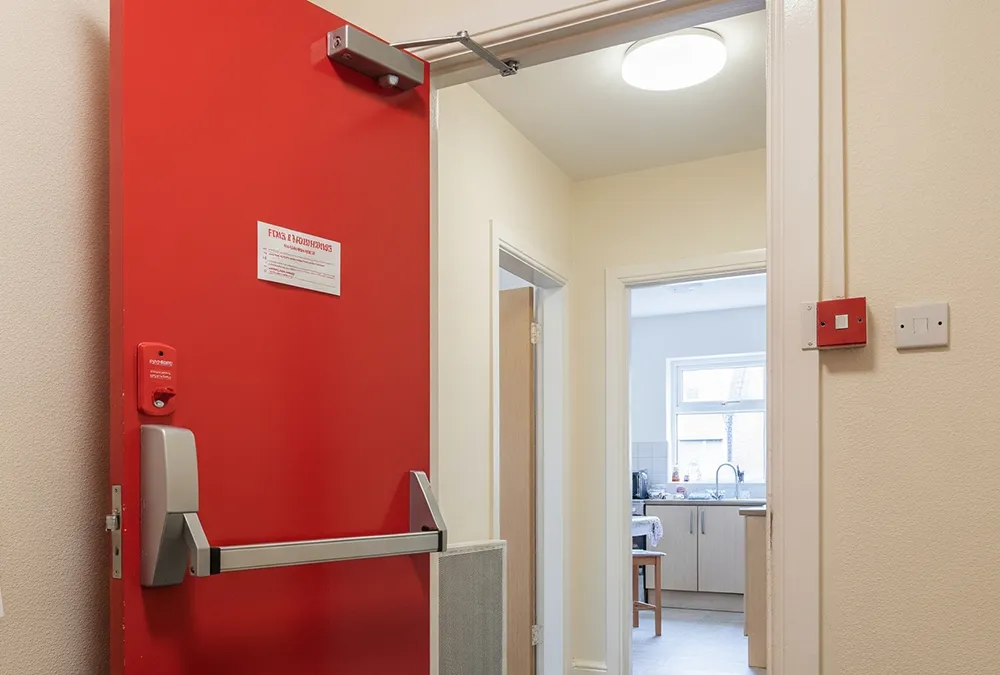
HMO fire compliance means meeting the fire safety duties and applicable property standards relevant to the particular building. It is not a single certificate or checklist that applies identically to every property.
Depending on the property and the legal requirements that apply, the main areas to consider may include:
- HMO licensing: Establish whether the property requires a licence and identify the conditions imposed by the relevant local authority.
- Fire risk assessment: Ensure that a suitable assessment is carried out where required and reviewed when necessary.
- Fire detection and warning: Check that the alarm and detection arrangements are appropriate for the property’s risks, layout and occupants.
- Fire doors and fire-resisting construction: Consider whether doors and relevant building elements provide appropriate protection for escape routes and against fire and smoke spread.
- Escape routes: Ensure that people can use the intended escape routes and that relevant routes are not obstructed.
- Emergency lighting: Establish whether emergency lighting is needed and whether installed equipment is maintained appropriately.
- Testing, maintenance and records: Keep relevant records of checks, maintenance, identified deficiencies and corrective actions.
These areas are related, but they are not interchangeable. An HMO licence inspection, a fire risk assessment, a specialist fire door inspection and a detailed compartmentation survey have different purposes and scopes.
HMO Licensing and Fire Safety Requirements in London
HMO licensing in England is governed by the Housing Act 2004 and associated regulations. Local authorities administer licensing within their areas and may operate different schemes and impose conditions relevant to their local licensing framework.
Mandatory HMO licensing
In general, mandatory licensing applies to an HMO occupied by five or more people who form more than one household and share facilities such as a kitchen, bathroom or toilet, subject to the statutory definitions and exceptions.
The previous requirement for a property to have three or more storeys was removed from the mandatory licensing criteria in 2018. However, the statutory framework includes qualifications for certain types of converted buildings and flats, so the basic threshold should not be treated as a complete test for every property.
Additional and selective licensing
A borough may operate an additional HMO licensing scheme covering categories of HMOs that are not already subject to mandatory licensing. It may also operate selective licensing for certain privately rented properties that are not necessarily HMOs.
These schemes are not identical across London. For example, Hounslow and Camden publish their own scheme details, and the scope and effective dates need to be checked against the relevant property address.
Before letting, buying or changing the use of a property, check the current licensing information from the borough where the property is located. Do not assume that a licence requirement or condition in one borough applies throughout London.
A licence is also not a substitute for meeting separate fire safety duties, maintaining the property or addressing any other applicable housing requirements.
Useful official resources include the GOV.UK HMO licence guidance and the Housing Act 2004.
Fire Risk Assessments for London HMOs
A fire risk assessment (FRA) examines fire hazards, the people who may be affected and the precautions needed to reduce risk. Where the Regulatory Reform (Fire Safety) Order 2005 applies, the Responsible Person must ensure that a suitable and sufficient assessment is carried out and reviewed as necessary.
For HMOs, it is important to establish which parts of the premises fall within the scope of the Fire Safety Order. Its requirements commonly apply to relevant common parts and areas under a person’s control; the legal treatment of private domestic accommodation is not identical in every respect.
A suitable assessment may consider:
- Potential ignition sources and combustible materials.
- The number and characteristics of occupants.
- Escape routes, stairs, exits and the arrangements for evacuation.
- Fire detection and warning systems.
- Relevant fire doors and fire-resisting separation.
- Emergency lighting and firefighting equipment where appropriate.
- Maintenance, testing and emergency procedures.
- The findings that require action and any further investigation needed.
Review and follow-up
An FRA should not be treated as a permanent certificate. Under Article 9 of the Fire Safety Order, the Responsible Person must review it regularly to keep it up to date, particularly where there is reason to suspect that it is no longer valid or where significant changes occur.
Examples of changes that may warrant review include alterations to the layout, a change in occupancy or use, refurbishment affecting fire precautions, or newly identified hazards.
There is no universal statutory rule that every FRA must be renewed every 12 months. Review arrangements should reflect the applicable legal duty, the property and its risk profile.
The findings also need to lead to appropriate action. Landlords and managers should keep relevant records and be able to identify which recommendations have been completed, which remain outstanding and whether interim precautions are needed.
For further detail, read How Often Should a Fire Risk Assessment Be Reviewed in the UK?.
Fire Alarm and Detection Requirements
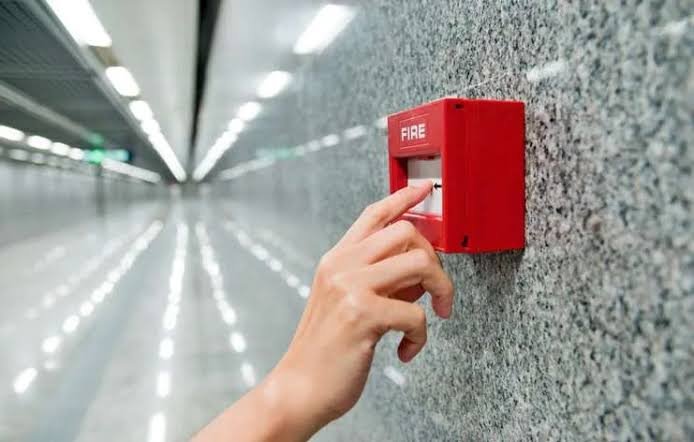
A suitable fire detection and warning arrangement should provide appropriate warning for the building and its occupants. The correct system cannot be determined by the fact that a property is an HMO alone.
Relevant considerations include:
- The property’s size, layout and number of storeys.
- How bedrooms, kitchens and shared spaces are arranged.
- The number of occupants and any relevant evacuation considerations.
- The relationship between rooms, corridors and escape routes.
- Existing fire precautions and the findings of the fire risk assessment.
- Applicable local authority licensing conditions and relevant technical standards.
Depending on the circumstances, an HMO may require interlinked smoke alarms, heat detection in relevant locations or a more comprehensive fire alarm system. These are examples, not a universal specification for every HMO.
Where British Standards are relevant, the correct standard and edition should be identified for the system and premises concerned. A landlord should not select a grade or category solely from a generic online checklist without checking the property’s requirements.
Testing and maintenance
An installed system must be maintained in working order in accordance with the applicable requirements, its design and relevant manufacturer instructions. Landlords and managers should ensure that faults are reported and addressed, and that appropriate testing and maintenance records are retained.
A fire risk assessment can help identify concerns about the suitability or management of a system, but detailed system design, commissioning or specialist investigation may require a suitably competent fire alarm professional.
Fire Doors and Compartmentation in HMOs
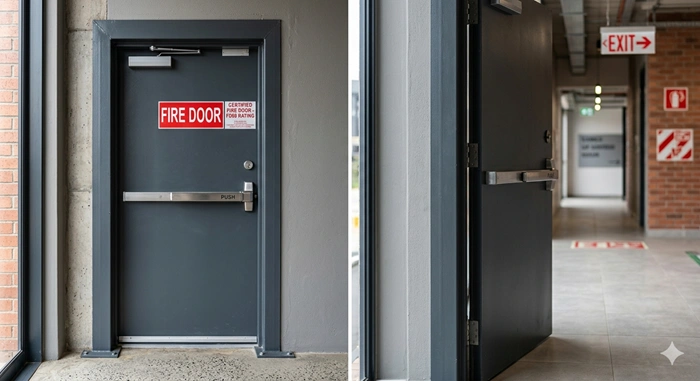
Fire doors and fire-resisting construction can help slow the spread of fire and smoke and protect escape routes. Their effectiveness depends on their intended function, specification, installation, condition and how they are maintained.
The doors needed in an HMO should be determined by the building’s design, fire strategy, assessment findings and applicable requirements. It is not appropriate to assume that every door in every HMO must have exactly the same specification.
When assessing relevant doors, issues to consider may include:
- Damage to the door leaf, frame, glazing or surrounding construction.
- Whether a door closes correctly and latches where required.
- The condition and operation of hinges, closers and other hardware.
- Gaps or alterations that could affect fire or smoke resistance.
- The condition of seals where they form part of the intended doorset performance.
- Whether the door appears suitable for its intended location and role.
The absence of a particular seal or visible certification mark does not, by itself, prove that every existing door is unsuitable. The assessment needs to consider the door’s intended performance and whether the existing assembly provides adequate protection for the actual risk.
Why compartmentation matters
Compartmentation uses fire-resisting construction to limit the spread of fire and smoke. Openings made for cables, pipes and other services can compromise this protection if they are not appropriately sealed.
A fire risk assessment may identify visible concerns or recommend further investigation. It does not necessarily include a detailed survey of concealed construction or every service penetration. Where the evidence or risk warrants it, a separate compartmentation survey or specialist inspection may be appropriate.
For more detail, see Common Fire Door Failures Identified in UK Inspections and theOFHSES fire door inspection service.
Escape Routes and Emergency Lighting
People need a suitable means of escape if a fire occurs. The escape strategy and the precautions required depend on the building, its layout, the occupants and the applicable fire safety requirements.
Landlords and managers should pay attention to:
- Corridors, stairs and exits being kept usable and free from obstructions.
- Doors on escape routes functioning as intended.
- Relevant fire-resisting construction being maintained.
- Escape routes being suitable for the occupants and the building’s evacuation arrangements.
- Signage and emergency lighting where needed.
- Procedures for raising the alarm and responding to a fire.
Emergency lighting is not a blanket requirement that can be determined simply by labelling a property an HMO. Its provision should be considered in the context of the escape route, available lighting, layout, risk assessment and applicable requirements.
Storage in shared corridors, damaged doors or changes to escape routes should be assessed and addressed according to their effect on fire safety. Where alterations affect the existing fire strategy, the Responsible Person or relevant property manager should establish whether the risk assessment and arrangements need to be reviewed.
What Can Happen If HMO Fire Safety Issues Are Not Addressed?
The consequences depend on the nature of the issue, the applicable legal framework, the property’s circumstances and the authority exercising its powers.
Potential outcomes may include:
- A request or requirement to provide information or remedy deficiencies.
- Fire safety enforcement action under the legislation that applies to the premises.
- Housing-related action where conditions create relevant hazards under housing law.
- Licensing conditions, refusal, variation or other licensing action where the statutory criteria are met.
- Restrictions on the use or occupation of premises in circumstances where a relevant statutory power is exercised.
These are different legal processes. A fire safety enforcement notice is not the same as an HMO licensing decision, and neither follows automatically from every defect or missing document.
A landlord should respond promptly to serious findings, understand which authority and legislation are relevant, and obtain appropriate advice where necessary. Where an enforcement notice has already been served, read its terms carefully and pay attention to any stated requirements and deadlines.
Professional assessment can help clarify findings and possible next steps, but it cannot guarantee licence approval, prevent enforcement or replace the landlord’s own legal responsibilities.
How London HMO Landlords Can Prepare for a Fire Safety Review
Use this checklist to organise relevant information before arranging a review or assessment.
- Confirm whether the property requires an HMO licence and identify the current borough-specific conditions.
- Gather the existing fire risk assessment and note when it was last reviewed.
- Record any significant changes to the layout, use, occupancy or fire precautions.
- Check available records for fire alarm testing, maintenance and reported faults.
- Review the condition and operation of relevant fire doors.
- Check that shared escape routes are usable and not obstructed.
- Identify whether emergency lighting or other fire safety measures need attention.
- Gather maintenance records, inspection reports and evidence of completed remedial work.
- List outstanding recommendations and clarify who is responsible for addressing them.
- Seek competent professional advice where the scope, suitability or condition of fire precautions is uncertain.
This checklist helps landlords prepare information and identify questions. It is not a substitute for a property-specific assessment or a complete list of every requirement that may apply.
How OFHSES Supports HMO Fire Compliance
OFHSES lists Fire Risk Assessments, Fire Door Inspections, Compartmentation Surveys and HMO Fire Compliance among its services. The booking page allows landlords and property professionals to select a service or request guidance where they are unsure which option is appropriate.
A suitable assessment or inspection can help establish the condition and suitability of relevant fire precautions, document findings and identify actions that need consideration. The scope should be agreed in advance, especially where a property may need a separate fire door inspection, compartmentation investigation or other specialist work.
Before booking, it is useful to provide:
- The property address and borough.
- The type of HMO and how it is occupied.
- The number of floors and approximate size.
- Any existing licence conditions or recent inspection correspondence.
- The current fire risk assessment, if available.
- Known concerns, alterations or outstanding recommendations.
OFHSES can then confirm whether it supports the location and discuss the appropriate scope and quotation.
Book an HMO Fire Compliance Review with OFHSES
Frequently Asked Questions
Do all HMOs in London need a fire risk assessment?
The applicable duties depend on the parts of the property and the legal framework involved. The Regulatory Reform (Fire Safety) Order 2005 applies to relevant premises and areas within its scope, including relevant common parts. Other housing and licensing duties may also apply. A landlord should establish the requirements for the specific property rather than assume one rule applies identically to every room and building.
Do HMO fire safety requirements vary between London boroughs?
Yes. National legislation applies according to its scope, but local authorities may operate different additional licensing or selective licensing schemes and impose relevant licence conditions. Always check the current rules for the borough where the property is located.
What fire alarm system does an HMO need?
The appropriate arrangement depends on the property’s layout, occupancy, risk assessment, applicable standards and licensing conditions. Some properties may need interlinked smoke alarms and heat detection; others may require a more comprehensive system. There is no single alarm specification that can safely be prescribed for every HMO.
Do all HMO bedrooms need fire doors?
Not necessarily the same door specification in every property. Door requirements depend on the building’s fire strategy, risk assessment, layout and applicable standards or licence conditions. The suitability of an existing door should be assessed in context rather than determined by one feature alone.
When should an HMO fire risk assessment be reviewed?
Where the Fire Safety Order applies, the Responsible Person must review the assessment regularly to keep it up to date, particularly when there is reason to suspect it is no longer valid or when significant changes occur. Alterations, changes in use or occupancy, and newly identified hazards may trigger a review.
What should a landlord prepare before an HMO inspection?
Gather the current licence and conditions, fire risk assessment, alarm and maintenance records, relevant inspection reports, details of remedial work and information about any recent alterations. Check that shared escape routes are usable and note outstanding concerns. The precise preparation needed depends on the type of inspection and the authority involved.
Can a fire safety assessment guarantee HMO licence approval?
No. An assessment can help identify and document fire safety issues, but licensing decisions depend on the applicable law, the property’s circumstances and the local authority’s assessment of the application and relevant conditions. An assessment does not guarantee approval or remove the landlord’s responsibility to carry out required work.
Arrange an HMO Fire Compliance Review
If you are preparing an HMO for letting, reviewing existing fire precautions or trying to understand findings from a previous assessment, start by identifying the requirements that apply to your property and the areas that need attention.
OFHSES offers a booking route for landlords and property professionals to discuss Fire Risk Assessments, fire door inspections, compartmentation surveys and HMO fire compliance.
Enquire through the OFHSES booking page to provide your property details and discuss the appropriate service.
This guide provides general information, not a property-specific legal determination. Requirements depend on the building, its use, the applicable legislation and local licensing conditions.