If you manage a rental property, HMO, residential block or commercial premises in Romford, a suitable fire risk assessment can help you understand the fire hazards present, identify who may be at risk and determine which precautions need attention.
Under the Regulatory Reform (Fire Safety) Order 2005, the Responsible Person for premises within its scope must ensure that a suitable and sufficient fire risk assessment is carried out and kept under review. The specific duties depend on the type of premises, how it is used and who has control of relevant areas.
OFHSES provides fire risk assessment services for property and business clients. If you need an assessment for a property in Romford, use the OFHSES booking page to submit the property details and request the appropriate service.
Fire Risk Assessment Services in Romford
A fire risk assessment is a structured evaluation of a building’s fire hazards, the people who may be affected and the precautions needed to reduce risk.
The assessment should reflect the actual premises rather than rely on a generic checklist. Factors such as the building’s layout, occupancy, activities, escape routes and existing fire safety measures all influence what needs to be examined.
OFHSES lists fire risk assessments among its services and provides a booking route for landlords, property managers, commercial operators and other customers. The booking form allows users to identify a property type and provide information such as the address, number of floors, approximate size and preferred timeframe.
Book a Fire Risk Assessment in Romford
When making an enquiry, provide the property address, its current use, approximate size, number of floors, occupancy details and any known fire safety concerns. This information helps establish the appropriate scope of work.
Who Is Responsible for a Fire Risk Assessment?
The Regulatory Reform (Fire Safety) Order 2005 places duties on the Responsible Person for premises within its scope. Depending on the circumstances, this may be an employer, the person who controls the premises, an owner, an occupier or another person with relevant control.
More than one person may have duties at the same premises. Where responsibilities overlap, the relevant parties need to cooperate and coordinate their fire safety arrangements.
For example:
- Business owners and employers may be responsible for fire safety arrangements in their workplace.
- Landlords and property managers may have duties in relation to areas and fire precautions under their control.
- Managing agents and facilities managers may hold relevant responsibilities where their role gives them control over the premises or fire safety arrangements.
- Residential block managers may have duties concerning common parts, including shared escape routes and other areas covered by the applicable fire safety legislation.
The legal position depends on the premises, the arrangements in place and the extent of each person’s control. A landlord is not automatically the only Responsible Person for every part of a building.
For premises within scope, the Responsible Person must ensure that a suitable and sufficient assessment is carried out, appropriate precautions are implemented and maintained, relevant findings are recorded where required, and the assessment is reviewed regularly.
See the official GOV.UK guidance on fire safety responsibilities.
What Does a Fire Risk Assessment In Ramford Include?
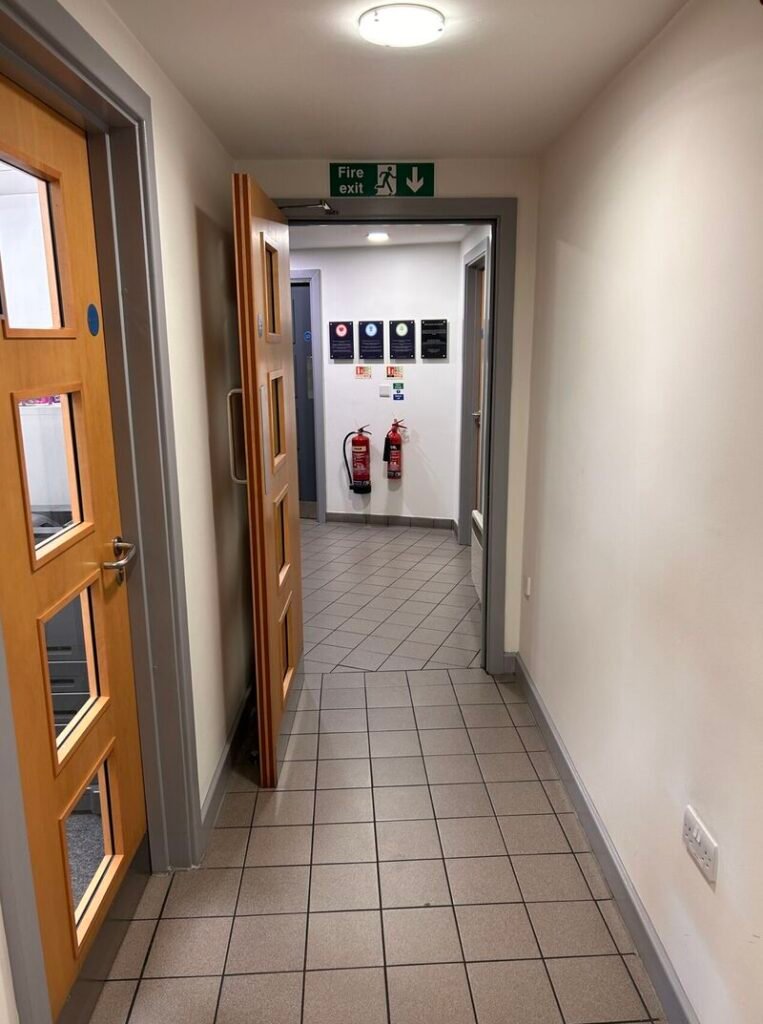
A suitable fire risk assessment considers the premises and the people who may be exposed to fire risks. Its scope should reflect the building’s use, complexity and existing fire precautions.
Depending on the property, an assessment may consider the following.
Fire hazards and ignition sources
The assessor considers potential sources of ignition, combustible materials, electrical risks, housekeeping, storage arrangements and other circumstances that could contribute to a fire.
People who may be at risk
The assessment considers the people who use or may be affected by the premises. This may include employees, residents, customers, visitors, contractors and people who may need assistance to evacuate.
Escape routes and emergency arrangements
Escape routes, exits, stairways, signage and access to exits may be examined. The assessment should consider whether people can reach a place of safety and whether the emergency arrangements are appropriate for the building and its occupants.
Fire detection and warning systems
The assessor considers relevant fire detection and warning arrangements, including their suitability for the premises and available information about testing and maintenance.
Emergency lighting and firefighting equipment
Where relevant, the assessment considers emergency lighting, firefighting equipment and the maintenance arrangements associated with those measures.
Fire doors and compartmentation
Fire doors and fire-resisting construction may form part of the assessment because they can help limit the spread of fire and smoke and protect escape routes. The extent of examination depends on the assessment’s scope and the risks identified.
A fire risk assessment does not automatically constitute a specialist inspection of every fire door or a detailed compartmentation survey.
Emergency procedures, training and maintenance
The assessment considers appropriate emergency procedures, information and instruction for relevant people, staff training where applicable, and the arrangements for maintaining fire safety measures.
Findings and recommended actions
The report should communicate significant findings, relevant deficiencies and appropriate corrective actions. Recommendations should be sufficiently clear to help the Responsible Person decide what needs to happen next and how identified risks should be managed.
OFHSES describes its assessment service as including structured assessment, risk categorisation and an action plan. Confirm the precise scope and report deliverables for your premises when requesting a quotation.
When Should a Fire Risk Assessment Be Reviewed?
There is no single universal statutory deadline requiring every fire risk assessment to be renewed annually. Under Article 9 of the Regulatory Reform (Fire Safety) Order 2005, the assessment must be reviewed regularly to keep it up to date, particularly when there is reason to suspect it is no longer valid or when significant changes occur.
A review may be needed when:
- The building is refurbished, extended or materially altered.
- The layout or use of the premises changes.
- Occupancy changes in a way that affects fire risk or evacuation.
- New hazards or previously unrecognised risks are identified.
- A fire, significant near miss or other incident raises questions about existing precautions.
- Fire detection, escape routes, fire doors or other fire safety measures change.
- Existing precautions may no longer be adequate.
- Other applicable legal duties or the premises’ risk profile require further review.
An annual review can be a useful management practice for some premises, but it should not be described as a universal statutory renewal deadline. The appropriate review arrangements depend on the building, the risk and any relevant specific requirements.
An assessment does not become automatically invalid simply because it has reached its first anniversary. Equally, an assessment that is relatively recent may need review if circumstances have materially changed.
For more detail, read How Often Should a Fire Risk Assessment Be Reviewed in the UK?.
Fire Risk Assessments for HMOs and Residential Buildings in Romford
Houses in multiple occupation (HMOs), converted properties and blocks of flats can have different layouts, occupancy arrangements and shared areas. The relevant fire safety requirements depend on the type of building and how it is occupied and managed.
A suitable assessment may need to consider:
- Shared corridors, stairways and escape routes.
- Fire detection and warning arrangements.
- Fire doors and fire-resisting separation.
- The number and characteristics of occupants.
- Emergency procedures and evacuation arrangements.
- Relevant maintenance records and existing fire safety measures.
- The management of common parts and areas under different parties’ control.
For HMOs, the fire risk assessment should be considered alongside any applicable housing, management and licensing requirements. An FRA alone does not establish that a property satisfies every HMO licensing condition or other housing obligation.
Where a building contains multiple dwellings, it is also important to establish which parts of the building are within the scope of the relevant fire safety legislation. The duties applying to communal areas may differ from requirements relating to individual private dwellings.
For more detailed landlord guidance, see HMO Fire Safety Requirements: What Landlords Must Know.
Fire Risk Assessments for Commercial Premises
Offices, shops, warehouses, industrial units and other commercial premises can present different fire hazards depending on their activities, equipment, storage arrangements and occupancy.
A commercial fire risk assessment should reflect the way the premises actually operate. Relevant considerations may include:
- Work activities and potential ignition sources.
- Storage and handling of combustible or dangerous materials.
- Escape routes, exits and evacuation arrangements.
- Fire detection and warning systems.
- Emergency lighting and firefighting equipment where relevant.
- Staff responsibilities, information, instruction and training.
- The needs of visitors, contractors and people who may require assistance.
- Maintenance arrangements and the management of identified risks.
A warehouse with substantial storage areas, for example, may require different considerations from a small office or retail unit. The assessment should be proportionate to the premises and identify the precautions needed in that particular setting.
The Responsible Person should also consider the relationship between the assessment, day-to-day fire safety management and maintenance of relevant fire precautions.
Fire Doors and Compartmentation
Fire doors and fire-resisting construction may be important elements of a building’s fire safety arrangements. Depending on their location and design, they can help restrict fire and smoke spread and protect escape routes.
A fire risk assessment may identify concerns such as:
- A door or frame showing visible damage.
- A fire door that does not close correctly.
- Damaged or missing seals where these are required for the door’s intended performance.
- Escape routes obstructed by stored items or other obstacles.
- Visible damage or openings in relevant fire-resisting construction.
- Uncertainty about whether a particular door or barrier is suitable for its intended purpose.
These examples are not all equivalent in severity. The significance of a finding depends on the door or construction involved, its location, the building’s fire strategy and the effect of the defect on fire safety.
An FRA may identify the need for a closer examination, but it does not necessarily include a door-by-door specialist inspection or a detailed survey of concealed compartmentation. Where necessary, the Responsible Person may need to arrange additional investigation by a suitably competent specialist.
For examples of fire door defects, read Common Fire Door Failures Identified in UK Inspections.
Fire Door Checking Duties Under the Fire Safety (England) Regulations 2022
The Fire Safety (England) Regulations 2022 contain specific fire door checking duties for certain residential buildings. These duties should not be applied indiscriminately to every property in Romford or every commercial building.
Under Regulation 10, the Responsible Person for a building containing two or more sets of domestic premises, where the top storey is more than 11 metres above ground level, must:
- Undertake checks of fire doors in communal areas at least every three months.
- Use best endeavours to undertake checks of flat entrance doors at least every 12 months.
- Keep a record of the steps taken to meet the flat entrance door checking duty, including attempts to gain access where access is not granted.
The checks must include ensuring that the self-closing devices are working.
These requirements are specific to buildings within the regulation’s scope. They are not a universal quarterly or annual inspection schedule for every HMO, individual house, commercial premises or fire door in England.
The regulations also include duties to provide residents with information about keeping fire doors shut when not in use, avoiding interference with self-closing devices and reporting faults or damage.
These specific checks do not replace the wider duties to assess fire risks, maintain appropriate fire safety measures and address identified deficiencies. Nor do they mean that every fire risk assessment automatically includes a specialist inspection of each fire door.
Read the official Fire Safety (England) Regulations 2022 fire door guidance, updated in August 2025.
What Happens After a Fire Risk Assessment?
The assessment should help the Responsible Person understand the significant findings and determine which actions are appropriate.
Depending on the premises and the assessment’s scope, the report may identify:
- Fire hazards and people who may be affected.
- Deficiencies in existing precautions.
- Recommended corrective actions.
- The relative urgency of identified issues.
- Areas where additional investigation or specialist advice is needed.
- Matters that require ongoing monitoring, maintenance or review.
The Responsible Person should consider the findings, take appropriate action and ensure that relevant fire safety measures remain effective. Where more than one person has responsibilities, corrective actions may need to be coordinated.
If a serious deficiency is identified, the response should reflect the nature and level of risk. This may require prompt remedial work, interim precautions, specialist investigation or other appropriate action. A particular finding does not automatically mean prosecution or loss of a licence; enforcement consequences depend on the circumstances and the applicable legal duties.
An FRA is not a one-off certificate that guarantees future compliance. Fire safety arrangements need to be maintained and reviewed as the premises and its use change.
Why Consider OFHSES for Your Fire Risk Assessment?
OFHSES lists fire risk assessment, fire door inspection and related fire safety services on its website. Its published service information describes a structured assessment process, risk categorisation and practical recommendations.
When choosing a provider, it is sensible to establish:
- Whether the provider has the competence appropriate to your building and its risks.
- What areas and fire safety measures the assessment will cover.
- What report and supporting documentation will be supplied.
- Whether specialist inspections or additional surveys are excluded from the initial scope.
- How findings and recommended actions will be communicated.
- What the quotation includes and whether any additional work may be required.
Before booking, discuss the premises and any known concerns so the provider can establish an appropriate scope of work.
Book a Fire Risk Assessment in Romford
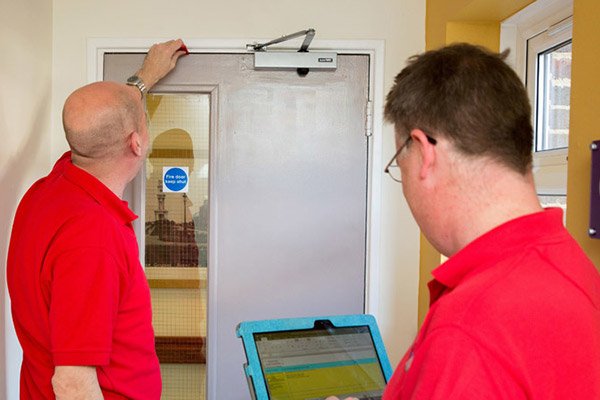
If you need a fire risk assessment for a business, HMO, residential block or other premises in Romford, you can submit an enquiry through the OFHSES booking page.
To help scope the request, be ready to provide:
- The property address and type.
- The building’s approximate size and number of floors.
- How the premises are used and who occupies them.
- Any existing fire risk assessment or relevant fire safety records.
- Known concerns, recent alterations or changes in occupancy.
- Your preferred timeframe.
The scope and quotation should be confirmed before the work is agreed.
Book or enquire about a fire risk assessment with OFHSES
For other fire safety services, visit OFHSES Fire Risk Assessment Services.
Frequently Asked Questions
1. Is a fire risk assessment a legal requirement for my business or property in Romford?
For premises within the scope of the Regulatory Reform (Fire Safety) Order 2005, the Responsible Person must ensure that a suitable and sufficient fire risk assessment is carried out. The rules applying to private domestic premises, shared residential areas and different property types are not identical, so the building’s use and circumstances matter.
2. Who is responsible for arranging a fire risk assessment?
The Responsible Person is responsible for ensuring that the required assessment is carried out. Depending on the premises and who controls them, this may be an employer, owner, occupier, landlord, managing agent or another relevant party. More than one person may have duties.
3. How often should a fire risk assessment be reviewed?
It must be reviewed regularly to keep it up to date and particularly when there is reason to suspect it is no longer valid or significant changes occur. The appropriate review arrangements depend on the premises and its risks.
4. Does a fire risk assessment need to be renewed every year?
There is no universal statutory rule requiring every fire risk assessment to be renewed annually. An annual review may be a useful management practice, but changes in the premises or fire risks may require a review sooner.
5. What does a professional fire risk assessment include?
It considers fire hazards, people at risk, existing precautions, escape routes, detection and warning arrangements, emergency procedures, maintenance and other matters relevant to the premises. The report should explain significant findings and appropriate actions.
6. Do HMOs need fire risk assessments?
The applicable requirements depend on the HMO’s layout, use, management and the areas involved. Fire safety duties may apply to relevant common parts and other premises within the scope of the legislation. An FRA should be considered alongside applicable HMO management, housing and licensing requirements.
7. Are fire door inspections part of a fire risk assessment?
A fire risk assessment may consider the condition and suitability of relevant fire doors and identify concerns. It does not automatically include a detailed specialist inspection of every door. The required scope depends on the premises, the assessment and any separate checking duties.
8. Which buildings are subject to the Fire Safety (England) Regulations 2022 fire door checking duties?
The specific quarterly checks of communal fire doors and best-endeavours annual checks of flat entrance doors under Regulation 10 apply to buildings containing two or more sets of domestic premises where the top storey is more than 11 metres above ground level. Other duties under the regulations have their own scope.
9. What happens if a fire risk assessment identifies serious deficiencies?
The Responsible Person should assess the findings and take appropriate action in line with the risk and applicable duties. This may include prompt remedial work, interim precautions or specialist advice. Enforcement action depends on the circumstances; it is not an automatic consequence of every finding.
10. Can an existing fire risk assessment be reviewed after refurbishment?
Yes. Significant alterations, changes in layout or use, or changes to fire precautions may mean the assessment needs to be reviewed and updated. The review should consider how the changes affect fire hazards, people at risk and existing precautions.
11. How can I book a fire risk assessment in Romford?
Visit the OFHSES booking page and provide the property details, type, approximate size, use and preferred timeframe. OFHSES can then confirm whether it can support the location and establish the appropriate scope and quotation.
Legal information in this article is general guidance, not a substitute for an assessment of a specific building or advice on a particular legal situation. Requirements depend on the premises, its use and the duties that apply.